This guide covers exactly what to do: the right tools, a clear step-by-step process, stain-specific treatments, and the point at which DIY stops working and professional help is the smarter call.
Key Takeaways
- Act fast — heat bonds stains to fabric fibres, making them far harder to lift
- Always blot, never rub — scrubbing spreads the stain and frays fibres
- Match your cleaner to the seat material, not just the stain type
- Use a damp cloth, not a wet one — soaking seats risks watermarks and mould
- Deep-set stains on leather or specialty fabric typically require professional steam cleaning
How to Remove Car Seat Stains: Step-by-Step
Step 1: Prepare the Surface
Before applying anything liquid, vacuum the seat thoroughly. Loose crumbs and dry debris turn into muddy smears the moment moisture touches them — skipping this step creates a worse mess than you started with.
Next, identify your seat material:
- Fabric/cloth — porous, absorbs quickly, handles most DIY methods
- Leather — resists initial absorption but damaged by acidic or harsh cleaners
- Vinyl — easiest to clean, but can crack under aggressive scrubbing
- Alcantara — specialty material requiring very gentle treatment; no steam, no vigorous rubbing
Finally, do a spot test. Apply a small amount of your chosen solution to a hidden area, let it dry, and check for discolouration before touching the visible stain.
Step 2: Remove Excess Residue
For fresh liquid spills: Press a dry microfibre cloth firmly onto the stain and blot repeatedly. Do not wipe — any lateral movement pushes the liquid deeper into the padding.
For chunky or semi-dry stains (food, mud, vomit): Use a spoon or blunt card to scrape excess material toward the centre of the stain. Remove the bulk before introducing any cleaner.
Step 3: Apply the Right Cleaning Solution
| Seat Material | Recommended Solution | Avoid |
|---|---|---|
| Fabric/cloth | Mild dish soap + warm water (1:2 ratio), or baking soda paste (2 parts baking soda : 1 part water) | Over-saturation |
| Leather | pH-balanced leather cleaner, or 90% water / 10% neutral soap | Vinegar, abrasive cleaners |
| Vinyl | All-purpose upholstery cleaner or diluted dish soap | Aggressive scrubbing |
| Alcantara | Specialist alcantara cleaner, gentle dabbing only | Steam, vigorous rubbing |
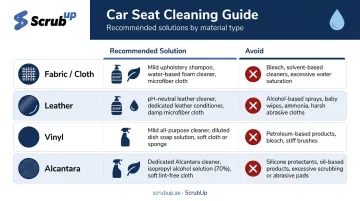
For fabric seats, ARM & HAMMER's upholstery guide recommends the baking soda paste ratio above.
Apply solution with a soft-bristle brush or microfibre cloth, working in small circular motions from the outer edge inward — this keeps the stain from spreading.
Step 4: Rinse and Wipe Clean
Wring out a clean microfibre cloth until it's damp — not dripping — then wipe the treated area to lift the cleaning solution and loosened residue. Repeat the application-and-wipe cycle 2–3 times for stubborn stains rather than over-saturating in one go.
Step 5: Dry Thoroughly
Pat the area dry with a fresh cloth immediately, then leave car doors or windows open for full air circulation. Consumer Reports warns against soaking seats because damp cushions can foster mould and a musty smell — a real risk in Dubai where a sealed, humid car interior is the norm between errands.
How to Tackle Different Types of Car Seat Stains
Food and Beverage Stains (Coffee, Juice, Ketchup)
Treat while still wet whenever possible. A dish soap and warm water solution works well on fabric for sugary or pigmented liquids like coffee and juice. Baking soda paste is also effective on fabric upholstery for ketchup, coffee, and sweat stains.
For any remaining pigment on fabric, a solution of white vinegar mixed with warm water (roughly ¼ cup vinegar combined with warm water and a drop of dish detergent) can help lift residual colour. Do not use vinegar on leather — Leather Honey explicitly warns it can damage sensitive leather surfaces.
Oil and Grease Stains
Don't jump straight to scrubbing. Follow these steps in order:
- Cover the stain generously with baking soda
- Leave it for 15–20 minutes to absorb the grease
- Vacuum off the powder, then follow with the dish soap method
Skipping absorption first just spreads grease across a wider area when you scrub.
For leather oil stains, sprinkle baking soda to absorb the oil — without scrubbing.
Vomit and Bodily Fluids
These need both stain removal and odour neutralisation.
- Remove solids with a spoon and blot up as much liquid as possible
- Apply an enzyme-based cleaner (available at auto shops) — Good Housekeeping's tested enzyme cleaner guide confirms these are effective on organic stains including vomit and urine
- Let it sit for 30 minutes, then wipe clean
- Sprinkle baking soda over the area, leave to dry, then vacuum
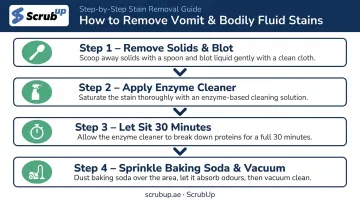
Enzyme cleaners break down the proteins causing both the stain and the smell. Check that the cleaner is safe for leather or alcantara before applying.
Mud and Dirt
The instinct is to clean immediately — resist it. Cleaning wet mud smears it deeper into fabric fibres. Once fully dry, vacuum off the crust, then treat any residual discolouration with the standard soap-and-water method.
Ink Stains
Rubbing alcohol applied sparingly with a cotton ball can lift ink from fabric seats. The critical rules:
- Dab, never rub
- Change cotton balls frequently to avoid redepositing the stain
- Always test for colour-fastness first, as alcohol can strip dye from some fabrics
Good Housekeeping supports rubbing alcohol for ink on fabric, provided you test for colour-fastness beforehand.
Key Factors That Affect Results
Three variables determine whether a stain comes out cleanly or needs professional intervention:
- Seat material: Fabric is porous and absorbs quickly, but responds to the widest range of DIY cleaners. Leather resists absorption initially but is easily damaged by acids or abrasives. Alcantara is the most restrictive — its official care guidance warns against both vigorous rubbing and steam machines.
- Age of the stain: This is the biggest single factor. A fresh spill often takes 5–10 minutes to treat. A stain baked into fabric after a Dubai afternoon in a sealed car will likely need multiple treatment cycles or professional attention.
- Cleaning solution strength: Too dilute and it won't lift the stain. Too concentrated or acidic and it damages fibres or fades colour. Dish soap should always be diluted, and baking soda paste should be thoroughly rinsed to avoid white residue drying into the fabric.
Common Mistakes to Avoid
These three errors turn a fixable stain into a permanent one:
- Blot — never rub. Rubbing frays fibres, spreads the stain, and forces it deeper into the padding. Use dabbing or inward circular motions only.
- Keep moisture minimal. Over-wetting the seat waterloggs the padding and leaves watermark rings once it dries. A damp cloth is enough.
- Always spot test first. Vinegar on leather or bleach-based cleaners on coloured fabric can cause permanent damage. Identify your seat material and test any solution in a hidden area before applying it broadly.
When DIY Isn't Enough: Getting a Professional Interior Clean
Some situations are simply beyond what a cloth and a bottle of upholstery cleaner can fix:
- Stains older than a few days that have bonded to fabric
- Large-area contamination (vomit across an entire rear seat)
- Deeply embedded odours that persist after cleaning
- Stains on leather or alcantara where the wrong product risks permanent damage
These are cases where household products simply can't generate the heat or pressure needed to break down what's embedded. ScrubUp's Steam Wash service (AED 105, 60–80 minutes) uses high-temperature controlled vapour steam to penetrate deep into seat fibres, loosening embedded stains and neutralising odour-causing bacteria. Because it relies on steam rather than water saturation, upholstery dries faster with no soaking risk.
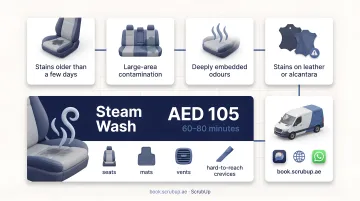
The service covers seats, mats, vents, and hard-to-reach crevices as part of a single booking.
The mobile model matters here: a technician comes directly to your parking spot — whether at home, the office, or a residential community across Dubai — with no need to drive anywhere or wait in line. You don't even need to be present. Booking is available via the ScrubUp app (iOS and Android), website at book.scrubup.ae, or WhatsApp.
Frequently Asked Questions
What is the best stain remover for car seats?
It depends on the material. A pH-balanced upholstery spray works well on fabric; leather requires a dedicated leather cleaner. For organic stains like food or vomit, enzyme-based cleaners are the most effective option regardless of seat type — just confirm material compatibility first.
How do you remove old, set-in stains from car seats?
Older stains need longer dwell times. Apply a baking soda paste or enzyme cleaner and leave it for up to 30 minutes before wiping. Repeat the treatment 2–3 times. For stains that have fully bonded to the fabric, steam cleaning is generally the most reliable method.
Can I use dish soap to clean car seats?
Yes: diluted in warm water, it's safe and effective for fabric and vinyl. Avoid it on leather, as it strips natural oils from the hide. Always rinse thoroughly — soap residue left in fabric fibres attracts new dirt quickly.
How do you get coffee stains out of car seats?
Blot immediately to lift as much liquid as possible, then apply diluted dish soap or upholstery cleaner and work inward from the edges with a soft brush. For stubborn pigment on fabric, a baking soda paste with a few drops of dish soap and white vinegar can help lift the remaining colour.
Is vinegar safe to use on car seat fabric?
In a diluted form combined with other ingredients, white vinegar is used in fabric and vinyl cleaning recipes (such as ARM & HAMMER's formulation). Never use it on leather — its acidity can cause cracking and strip the protective surface coating.
How often should I deep clean my car seats?
Spot-treat stains immediately and vacuum seats at least once a month. A full deep clean every 3–6 months works for most drivers — though families with children, pet owners, or regular in-car eaters should increase that frequency.