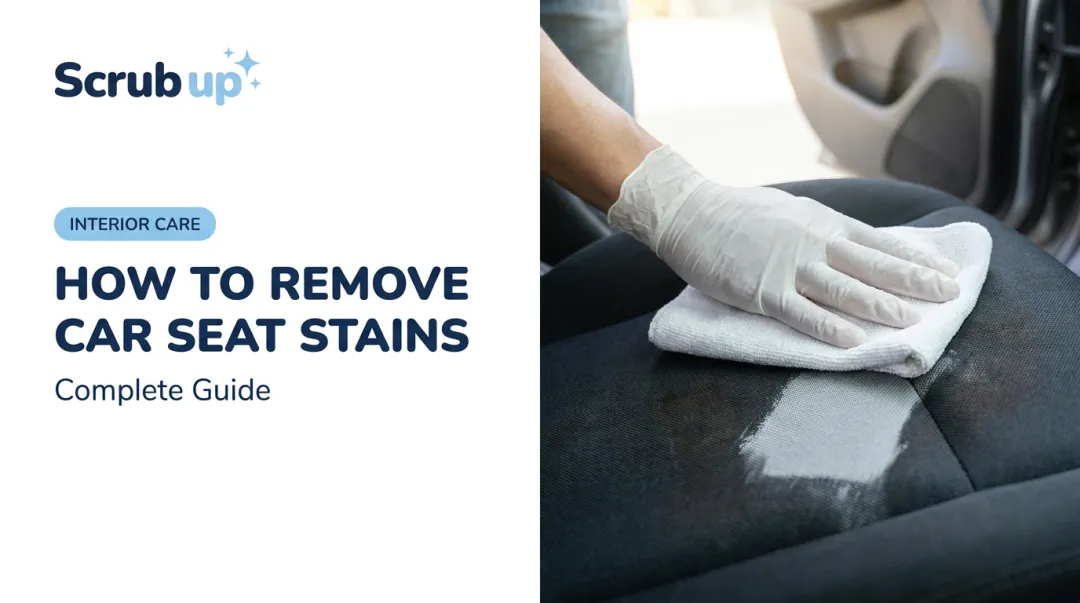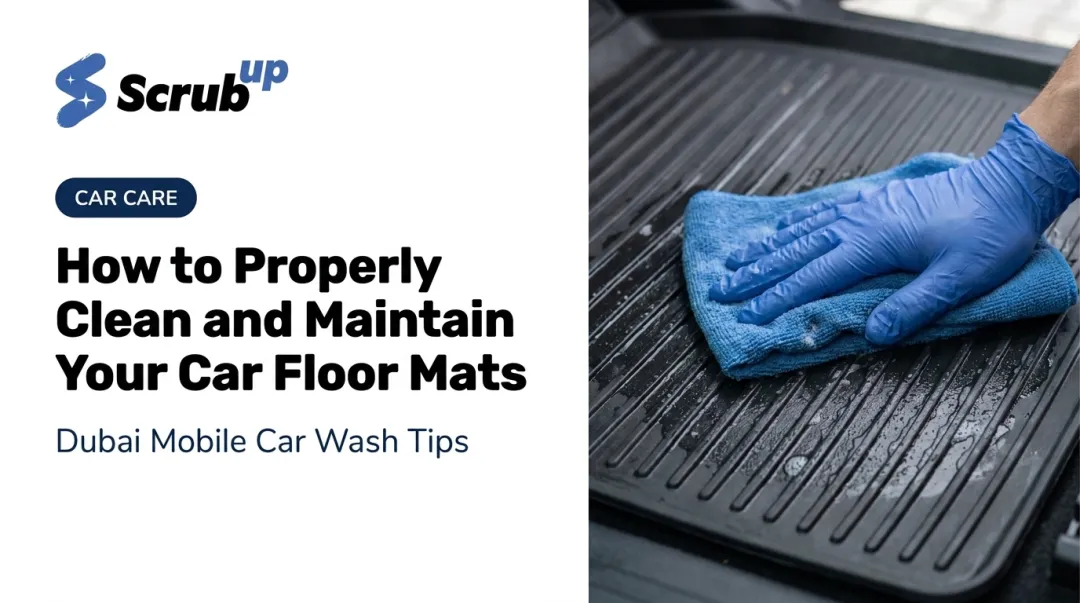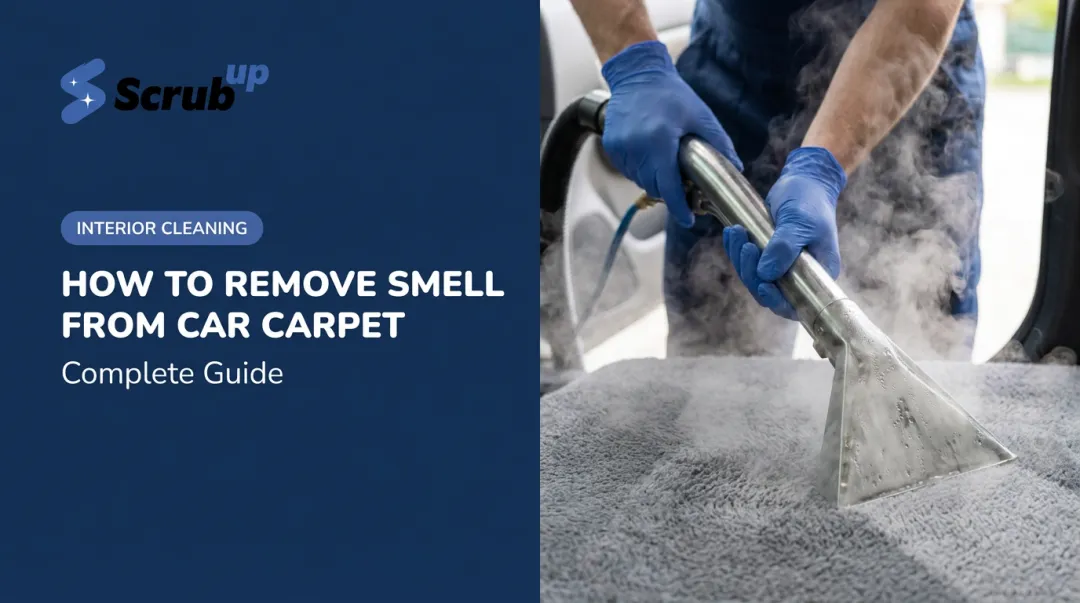
The challenge isn't just cleaning — it's cleaning correctly. The wrong approach can push stains deeper, discolour fibres permanently, or leave enough residual moisture to generate mould in a sealed car interior. This guide covers the step-by-step process, stain-specific treatments, and honest guidance on when DIY stops being enough.
Key Takeaways
- Vacuum before applying any liquid — loose sand turns into muddy residue when wet
- Match your cleaner to the stain type: one product does not work for oil, blood, coffee, and pet urine
- Use minimum moisture; over-soaking carpet leads to mould in the padding beneath
- Heat in parked Dubai cars accelerates stain bonding — treat spills promptly
- Persistent odours, set-in stains, or soaked padding typically require professional extraction
How to Clean Car Carpet Stains: Step-by-Step Guide
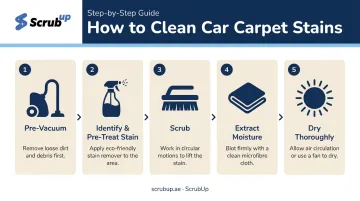
Step 1: Clear the Interior and Pre-Vacuum
Remove floor mats and take them outside for separate cleaning. Pull out loose rubbish, valuables, and anything that could get wet. A clear workspace means you won't miss stained sections hidden under clutter.
Vacuum thoroughly using a wet/dry shop vac or a car-specific vacuum. Focus on:
- Under seats and around pedals
- Along door jambs and seat rail channels
- Tight corners where sand collects (use compressed air first to dislodge it)
In Dubai, skipping this step causes real problems. RAM UAE recommends weekly interior vacuuming for vehicles in dusty conditions — and skipping it before any liquid treatment turns sand into a muddy, harder-to-remove residue.
Step 2: Identify Each Stain and Apply Pre-Treatment
Before reaching for any cleaner, identify the stain type. Coffee, blood, oil, and pet urine all require different chemistry — applying the wrong product can permanently set the stain.
For general stains, a reliable DIY pre-treatment is:
- 1 cup club soda
- 1 cup white vinegar
- 2 teaspoons baking soda
Spray directly on the stain and allow it to dwell for 5–10 minutes. Keep it damp throughout — if it dries during treatment, it can become harder to lift.
Step 3: Scrub the Stained Area
Use a stiff-bristled brush and scrub in multiple directions. This lifts stain particles from carpet fibres rather than grinding them deeper. Apply moderate pressure — too much force can fray fibres or damage the carpet backing.
Work one section at a time so the cleaner stays active. Changing directions regularly ensures the fibres are agitated from all angles — car carpets trap dirt deep in their pile, and a single-direction scrub won't dislodge it.
Step 4: Extract Moisture and Remove Residue
Blot — never rub — with clean microfibre towels. Work from the outer edge of the stain inward to avoid spreading it. Follow up with a wet/dry vac to pull out loosened dirt and moisture.
Avoid rinsing with large volumes of water. The goal is minimum effective moisture: just enough liquid to lift the stain, not enough to soak through into the carpet padding. A damp microfibre cloth is sufficient to remove any soap residue.
Step 5: Dry Thoroughly Before Closing Up
Leave car doors open for airflow. Dubai's ambient heat speeds surface drying, but closing windows on a damp carpet traps heat and bakes residual moisture and odours into the fibres.
Once the carpet feels dry, do a final check:
- Sprinkle baking soda over the treated area
- Leave it for 30 minutes
- Vacuum it up
This absorbs residual moisture and neutralises any lingering odour before you close the vehicle.
How to Remove Specific Types of Car Carpet Stains
Different stains respond to different chemistry — and the wrong approach often pushes residue deeper into carpet fibres or sets the stain permanently. Here's how to treat the five most common types.
Mud and Dirt Stains
Never wipe wet mud — it spreads further. Let it dry completely, then scrape or vacuum away the dried material first. Once the dry matter is removed, apply warm water with a small amount of dish soap and scrub with a stiff brush.
Coffee and Beverage Stains
Coffee has a pH of roughly 4.85 to 5.13, making it acidic. In a hot car interior, it sets quickly. Act fast — blot excess liquid immediately, then apply an enzyme-based cleaner or a vinegar-and-dish-soap solution. Coffee can begin setting within minutes in a warm cabin.
Oil and Grease Stains
Treat oil and grease in two stages:
- Apply baking soda generously to absorb the oil — let it sit for 15–20 minutes, then vacuum thoroughly
- Treat remaining residue with rubbing alcohol or an interior-safe degreaser
Never use engine bay degreasers on carpet fabric; they are too aggressive for carpet fibres and can cause discolouration or fibre damage.
Blood Stains
Cold water only. The American Cleaning Institute states clearly that hot water sets blood stains into fabric. Apply a cold water and laundry starch paste to lift the stain. For stubborn cases, try hydrogen peroxide — but test it on a hidden area first, as it can lighten some carpet colours.
Pet Urine and Odour Stains
Standard cleaners won't solve this. Pet urine contains uric acid that decomposes into pungent compounds — Bissell identifies these decomposition products as the real source of lingering odour, not the urine itself. Only an enzyme-based cleaner formulated for pet urine will break down those compounds at the source. Vinegar solutions mask the smell temporarily but leave the underlying chemistry intact.
What Affects How Well Car Carpet Stains Come Out
Even with the right technique, several variables determine whether a stain fully lifts or permanently sets.
Stain Age and Heat Exposure
Fresh stains are far easier to remove than set-in ones. In Dubai's climate, parked-car temperatures reaching 70°C accelerate the bonding of stain molecules to carpet fibres. A coffee spill left overnight in a hot car is a different cleaning challenge than one treated within the hour.
If you can't clean immediately, blot excess liquid and keep the area from drying out completely — this limits how deeply the stain bonds before you can properly treat it.
Carpet Fibre Type
Automotive carpets are manufactured in several constructions, each with different cleaning behaviour:
| Type | Characteristic | Cleaning Note |
|---|---|---|
| Tufted pile | Vertically aligned filaments | Releases liquids and particles relatively well |
| Needlepunch | Dense nonwoven structure | Traps dry particulate; vacuum thoroughly before any liquids |
| Loop pile | Looped surface fibres | Grit gets caught in loops; dry vacuuming critical |
| Cut pile | Softer, open pile ends | Can mat down; use gentler agitation |
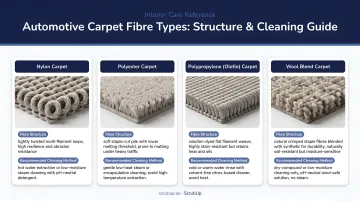
Higher-end vehicles often use denser tufted constructions that hold stains deeper and require more careful extraction to avoid damage.
Moisture Level During Cleaning
The principle of minimum effective moisture applies throughout the process. Over-wetting causes moisture to seep into the carpet padding and subfloor — once it reaches the padding, it creates conditions for mould and persistent odours that are hard to reverse. This risk is higher in Dubai's enclosed basement garages, where warmth and limited airflow compound the problem.
Common Mistakes When Cleaning Car Carpet Stains
- Rubbing the stain instead of blotting — this spreads it outward and drives it deeper into the fibres. Blot from the outside edge inward using a clean cloth
- Reaching for the wrong cleaner — warm water on blood sets it permanently, and harsh all-purpose sprays can discolour delicate carpet fabric. Match the product to the stain type
- Drenching the carpet with too much liquid — excess moisture seeps into the padding beneath and creates mould conditions. Use only as much liquid as needed to lift the stain
- Skipping the pre-vacuum step — spraying cleaner over loose sand and dirt pushes grit deeper into the fibres, creating a muddy residue that's far harder to extract
When to Skip DIY and Book a Professional Car Carpet Cleaning
Signs That DIY Methods Won't Fully Work
Some situations sit outside what a spray bottle and stiff brush can resolve:
- Stains set for several weeks or longer
- Persistent odour from pet urine or mould that returns after cleaning
- Large areas of discolouration across multiple carpet sections
- Staining that has soaked into the carpet padding, not just the surface fibres
What Professional Cleaning Delivers That DIY Cannot
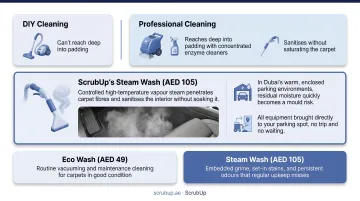
Professional detailers use heated carpet extractors and concentrated enzyme cleaners that reach deep into padding — tools that household products simply can't replicate. Where appropriate, they also apply dry vapour steam to sanitise without saturating the carpet.
ScrubUp's Steam Wash (AED 105) uses controlled high-temperature vapour steam to penetrate carpet fibres and sanitise the interior without soaking it. That matters in Dubai's warm, enclosed parking environments, where residual moisture quickly becomes a mould risk. ScrubUp brings all equipment directly to your parking spot, so there's no trip to a detailing shop and no waiting.
Choosing the right tier depends on what the carpet needs:
- Eco Wash (AED 49) — routine vacuuming and maintenance cleaning for carpets in good condition
- Steam Wash (AED 105) — embedded grime, set-in stains, and persistent odours that regular upkeep misses
A Brief Note on Prevention
Three habits that reduce stain frequency significantly:
- Remove shoes before getting in, or use rubber-backed floor mats that are easy to wipe down
- Vacuum weekly — in Dubai's dusty environment, fine sand accumulates quickly and becomes abrasive grit that works deeper into fibres over time
- Address spills within the first few minutes; the longer a liquid sits in a hot car interior, the more it bonds to the carpet
Frequently Asked Questions
What do car detailers use to clean carpets?
Professional detailers typically use pH-neutral enzyme-based carpet cleaners, heated carpet extractors for deep moisture removal, and stiff interior brushes for agitation. For heavily soiled interiors, dry vapour steam machines handle sanitisation and embedded stain removal without saturating the carpet.
How do you remove old stains from car carpet?
Keep the cleaner wet on the stain for at least 10 minutes, then work it in with a stiff brush and extract deeply with a wet vac or carpet extractor. Heat-dried or heavily set stains may need professional treatment to fully lift.
Can I use baking soda to clean my car carpet?
Baking soda is effective for absorbing odours and residual moisture, and works as a pre-treatment for oil-based stains. It is not a standalone cleaner for stain removal — it works best as part of a broader cleaning process alongside a proper carpet cleaner or solvent.
How do I get rid of the smell in my car carpet after cleaning?
Start by confirming the carpet is fully dry — residual moisture is the most common cause of post-clean odour. Sprinkle baking soda, leave it 30 minutes, then vacuum; for persistent smells from pet urine or mould, use an enzyme-based deodoriser or book a professional steam clean.
How often should I clean my car carpet?
Vacuum lightly every week, spot-clean stains immediately when they happen, and do a full deep clean every one to two months. In Dubai's dusty conditions or high-use vehicles, monthly deep cleaning is more appropriate than every two months.
What is the best homemade solution for car carpet stains?
Equal parts white vinegar and water with a small amount of dish soap — plus baking soda for extra deodorising — handles most fresh stains. Oil-based stains and protein-based stains like blood or pet urine need a cleaner matched to that specific stain chemistry.