Blood contains hemoglobin, a protein that bonds to fabric fibers when exposed to heat or allowed to dry. The wrong cleaning approach — hot water, aggressive scrubbing, the wrong product — can permanently set the stain into the material. According to the American Cleaning Institute, hot water sets blood stains by bonding the proteins to the fabric, making them nearly impossible to remove.
This guide covers how to identify your seat material, remove both fresh and dried blood using household products, the most damaging mistakes to avoid, and when a professional clean is the smarter call.
Key Takeaways
- Always use cold water — heat permanently sets blood stains into upholstery fibers
- Act fast: fresh blood lifts easily; dried blood needs an enzyme cleaner
- Leather, fabric, and vinyl each need a different cleaner — match the method to the material
- Blot, never rub — blotting lifts the stain; rubbing spreads and embeds it
- When DIY fails, professional steam cleaning breaks down set-in stains effectively
Before You Start: Identify Your Car Seat Material
Applying the wrong cleaner can bleach fabric, dry out leather, or damage vinyl, potentially causing more harm than the original stain. Before you reach for any cleaning product, know what you're working with.
Fabric and Cloth Seats
Most car seats use polyester or nylon-polyester blends. These are the most forgiving material for stain removal — they tolerate hydrogen peroxide, cold saltwater, and enzyme cleaners. The downside: fabric absorbs liquid quickly, so speed matters.
Leather and Vinyl Seats
Genuine leather requires pH-balanced, mild cleaners only. Harsh chemicals strip the natural oils from leather, causing the leather to crack and discolor. Vinyl and synthetic leather (leatherette) are more durable but need gentle treatment — strong solvents can damage the protective coating.
Perforated leather is a special case — liquid seeps past the surface and into the seat padding beneath. Surface-only cleaning won't fully address a blood stain on perforated leather.
Before treating any stain: test your cleaning solution on a hidden area under the seat. Wait 5 minutes. If there's no discoloration or damage, proceed.
How to Remove Fresh Blood Stains from Car Seats
Fresh blood — within the first 30–60 minutes — is significantly easier to remove because the protein hasn't fully bonded with the fibers yet.
First step for all seat types: blot excess blood immediately with a clean cloth or paper towel. Work from the outside edge inward. Never rub.
Fabric and Cloth Seats
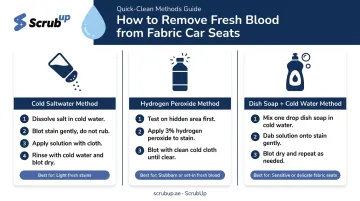
Three methods work well here, depending on what you have available:
Cold Saltwater Method
- Mix 2 teaspoons of salt in 1 cup of cold water
- Spray or apply directly to the stain
- Blot with a clean dry cloth — repeat until the stain lifts
- Rinse with cold water and blot dry
Salt draws blood out of fibers while cold water prevents protein bonding.
Hydrogen Peroxide Method
- Apply 3% hydrogen peroxide to a clean cloth
- Dab onto the stain — allow to fizz for 30–60 seconds
- Blot and rinse with cold water
It works by oxidizing blood proteins — but it has bleaching properties too. Research confirms it oxidizes colored organic molecules, so test on dark fabrics first and never leave it sitting too long.
Dish Soap + Cold Water Method
- Mix 1 tablespoon of liquid dish soap with 2 cups of cold water
- Apply with a toothbrush using gentle circular strokes
- Blot with a damp cloth and rinse thoroughly
This is the gentlest option — good for repeated use or sensitive fabric colors.
Leather Car Seats
Leather requires a lighter touch than fabric. Use mild dish soap suds (not excess liquid) on a soft cloth. Wipe in one direction only — don't scrub, as friction damages the surface finish.
Rinse with a barely damp cloth, then dry immediately. Follow with a leather conditioner to restore the moisture the cleaning process removes.
Vinyl and Synthetic Leather Seats
Mix ½ teaspoon dish soap and 1 tablespoon ammonia in a spray bottle with cold water. Spray on the stain, let sit 3–5 minutes, scrub gently with a soft toothbrush, then blot and rinse.
Critical warning: Never mix ammonia with bleach — this produces toxic chloramine gases. Work with windows open and never combine cleaning products.
How to Remove Dried Blood Stains from Car Seats
Dried blood has oxidised and bonded with fabric fibers, making it resistant to simple solutions. You need to rehydrate and break down the protein before attempting removal.
In Dubai, this challenge is more acute. Vehicle interiors can rise 11°C in as little as 10 minutes in hot conditions — a stain that takes hours to set in cooler climates can bond much faster in a parked Dubai car. The sooner you treat it, the better your odds of full removal.
Step 1: Loosen the Dried Blood
Gently scrape off any crusty dried residue using a soft-bristled toothbrush or a plastic edge. Don't press hard or spread the flakes. Vacuum up the loosened debris before applying any liquid.
Step 2: Apply a Protein-Breaking Cleaner
This is where material type matters most:
For fabric seats:
- Apply an enzyme-based cleaner directly to the stain (enzyme cleaners contain proteases that digest protein-based stains)
- Alternatively, mix baking soda with cold water in a 1:2 ratio to form a paste and apply directly
- Let either treatment sit for 30 minutes — University of Georgia Extension recommends a minimum 30-minute cool-water soak for old blood stains
- Unseasoned meat tenderizer mixed with cold water is another option — it contains bromelain enzymes that break down blood proteins. Use only unseasoned product, as seasonings can create new stains
For leather seats:
- Stick to mild soap and cold water — avoid enzyme cleaners, hydrogen peroxide, or acid-based treatments on leather
Step 3: Scrub, Blot, and Rinse
After the dwell time:
- Work the cleaner into the stain with a soft brush
- Blot (don't rub) with a clean damp cloth
- If color remains on fabric, apply hydrogen peroxide and repeat
- Rinse thoroughly with cold water and blot dry
Step 4: Dry the Seat Properly
- Blot remaining moisture with a dry microfiber cloth
- Air dry with windows open
- Never use a hair dryer or direct sunlight while wet — heat can set any remaining traces of the stain
- For leather, apply conditioner once dry to restore moisture
Common Mistakes to Avoid When Removing Blood Stains
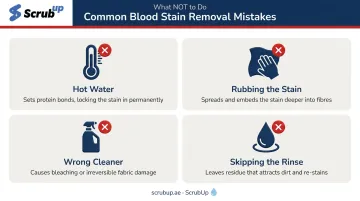
Most failed attempts come down to four errors:
- Hot or warm water permanently bonds blood proteins to upholstery fibers. Use cold water at every stage — from first blotting through the final rinse
- Rubbing spreads the stain wider, pushes it deeper into fabric, and damages fiber structure. Always dab with a clean section of cloth
- Wrong cleaners cause permanent damage: hydrogen peroxide bleaches dark fabric, alkaline cleaners strip leather finish, and strong solvents degrade vinyl. Always match the product to the material and test in a hidden spot first
- Skipping the rinse leaves residue that attracts dirt and causes secondary staining. Ammonia and hydrogen peroxide in particular keep damaging upholstery long after you've finished cleaning
How to Prevent Blood Stains and Protect Your Car Seats
Prevention is simpler than removal. A few practical habits reduce the risk of a permanent stain:
Keep a basic car emergency kit in the glovebox:
- White microfiber cloths
- Small spray bottle filled with cold water
- Travel-size dish soap
- Disposable gloves
Fast access in the first few minutes makes the difference between a clean seat and a set-in stain.
Protecting Fabric Seats
Apply a fabric protector spray every few months. 3M Scotchgard Auto Fabric & Carpet Protector is available at UAE retailers including ACE UAE and repels liquids before they penetrate fibers. Waterproof seat covers are also worth keeping on hand for family trips or medical transport — they create a removable physical barrier without compromising the seat itself.
When Surface Cleaning Isn't Enough
For stains that penetrate deep into fabric weaves, seams, or crevices, ScrubUp's Steam Wash uses controlled vapor at 170°C to break down embedded grime, kill bacteria, and eliminate odors without harsh chemicals.
Priced at AED 105, the service comes to your parking spot anywhere in Dubai. Book through the ScrubUp app, website, or WhatsApp.
Frequently Asked Questions
Does blood permanently stain leather?
Blood can permanently stain or discolour leather if not treated quickly or if the wrong cleaner is used. Act fast with mild soap and cold water, then follow up with a leather conditioner — dried, set-in blood on untreated leather is very difficult to reverse without professional help.
Does hot water set blood stains?
Yes. Heat causes the proteins in blood to coagulate and bond with upholstery fibers. Use cold water at every stage of blood stain removal — from first blotting through to the final rinse — regardless of the cleaning method you choose.
How do I remove dried blood stains from car seats?
Scrape off the dried crust, apply an enzyme cleaner or baking soda paste, and let it sit for 30 minutes. Scrub gently, blot with a damp cloth, and rinse with cold water. Repeat if needed — dried blood often requires multiple cycles.
Can I use hydrogen peroxide on leather car seats?
Avoid it. Hydrogen peroxide's bleaching properties can discolour and dry out leather. Stick to mild dish soap with cold water for leather seats, and follow up with a leather conditioner to restore moisture after cleaning.
What household items remove blood stains from car seats?
The most effective options are cold saltwater, 3% hydrogen peroxide (light-coloured fabric only), liquid dish soap, baking soda paste, and unseasoned meat tenderizer.
How long before blood stains become permanent on car seats?
Blood begins to set as it dries and becomes harder to remove with heat exposure. In Dubai, where parked car interiors can rise 10°C or more in under 10 minutes, this process accelerates significantly. Treat any blood stain immediately — do not wait.