Pet hair is stubborn for a specific reason. When pets sit, shift, and shed, friction between hair strands and synthetic car fibres creates triboelectric charging — the same static effect that makes carpet cling to socks. Individual hairs anchor into the pile at the root, which is why standard vacuuming struggles with deeply embedded fur rather than lifting it cleanly.
This guide covers the right tools, a proven step-by-step removal method, the variables that affect difficulty, and how to prevent buildup from coming back.
Key Takeaways
- Vacuuming alone won't remove embedded hair — you must loosen it first with a rubber-based tool
- Short, fine hairs (think Pugs, Labradors) embed deeper and need more friction-based work than long hair
- Leather and vinyl repel hair; deep-pile carpet traps it hardest
- Seat covers and pre-trip brushing cut cleaning time significantly
- Professional steam cleaning outperforms DIY for months of neglect or persistent odours
What You Need to Remove Pet Hair from Your Car
Results depend almost entirely on the right tools. Improvised solutions — duct tape, a damp cloth, random brushes — tend to move hair around rather than remove it.
Tools and Equipment
Core toolkit:
- Dedicated rubber pet hair brush or rake — the most effective category for embedded carpet and seat hair
- Wet-dry vacuum or strong handheld vacuum with a crevice attachment
- Microfiber cloths for hard surfaces and final wipe-down
- Wide-head and brush-head vacuum attachments for different surface types
Optional but useful:
- Rubber gloves (dampened slightly) — budget alternative to a rubber brush
- Squeegee — efficient for large flat areas like cargo liners and removable floor mats
- Diluted fabric softener in a spray bottle — helps release statically charged hair on heavy-buildup cloth surfaces
Preparation Checks
Before starting, do three things:
- Remove all loose items from seats, footwells, and the trunk
- Open all doors for ventilation
- Confirm the interior is dry — wet surfaces cause hair to clump against fabric fibers rather than release from them, leaving residue that's harder to remove
How to Remove Pet Hair from Your Car: Step-by-Step
The order of these steps matters. Most failed attempts happen because people vacuum before loosening hair — or skip hard surfaces entirely.
Step 1: First Vacuum Pass to Clear Loose Debris
Run a vacuum with a wide-head attachment over all fabric surfaces. This picks up loose dirt, dust, and surface hair that isn't yet embedded, so your rubber tool work isn't fighting through debris.
Technique matters here:
- Use a lifting motion, not a pressing-down stroke — pressing pushes hair deeper into fibres
- Vacuum in multiple directions to catch strands lying flat
- Use a wide floor tool for flat carpet areas; switch to a brush-head attachment for seat surfaces
Step 2: Loosen Embedded Hair with a Rubber Tool
According to The Drive's real-world testing, rubber pet hair tools mechanically separate hair woven into rug fibres in a way that vacuums simply cannot replicate. The rubber surface creates friction and a mild electrostatic effect that pulls strands up from the fibre roots into visible clumps.
Technique:
- Work in small sections using short, firm strokes in one direction
- Hair should gather into rows or clumps — this is exactly what you want before vacuuming
- Don't scrub back and forth; unidirectional strokes build up the clumps efficiently
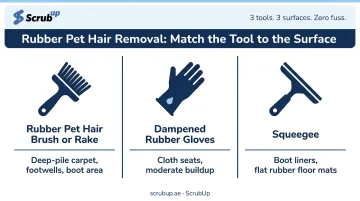
Tool options by surface:
| Tool | Best For |
|---|---|
| Rubber pet hair brush or rake | Deep-pile carpet, footwells, boot area |
| Dampened rubber gloves | Cloth seats, moderate buildup |
| Squeegee | Boot liners, flat rubber floor mats |
Avoid metal-bristle grooming brushes — they're designed for pet coats, not upholstery, and can pull and damage seat fabric permanently.
Step 3: Vacuum Again Immediately After Loosening
Once hair is clumped and raised, vacuum before it settles back into the pile. This second pass will remove significantly more hair than the first.
Don't skip these high-accumulation zones:
- Seat seams and the gap between the seat and centre console
- Seat rails (the metal tracks under seats)
- Edges of floor mats where they meet the carpet
- Backs of front seats, where rear-seat pets press directly against the fabric
For stubborn embedded hair in coarse boot-area carpet, a second round of rubber brushing followed by another vacuum pass is often necessary.
Step 4: Address Hard Surfaces and Interior Details
Fabric isn't the only surface that holds hair — door panels, plastic trim, rubber floor mat ridges, and dashboard edges all collect it too.
- Wipe hard surfaces with a dry or lightly damp microfiber cloth; it lifts hair without spreading it around
- Clear vents and narrow gaps with a soft detailing brush or a short burst of compressed air, then vacuum up what's dislodged
- Run the crevice attachment along seat rails and under-seat edges — hair missed here gets tracked back into the cabin
Finish with a clean microfiber wipe across all hard surfaces to pick up anything disturbed during the process.
Key Factors That Affect How Hard Pet Hair Is to Remove
Two cars, same dog, same journey — they can look completely different inside. Here's why.
Surface Type
Research from NGC Middle East confirms that leather and vinyl repel pet hair and are straightforward to clean, while textured woven fabrics trap hair, dander, and dirt in their construction. Tight, dense weaves resist hair penetration, while open or loose weaves let hair work deep into fibres where it becomes genuinely difficult to extract.
Practical breakdown:
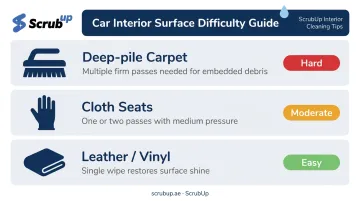
- Deep-pile carpet (boot areas, footwells): the hardest surface — hair embeds in the pile and needs a rubber brush with multiple firm passes
- Cloth seats: moderately difficult — a rubber glove or stiff brush usually clears it in one or two passes
- Leather/vinyl: the easiest — a single microfiber wipe is usually enough
Hair Type and Breed
Short, fine hairs from breeds like Labradors and Pugs embed deeply into fabric fibres and are nearly invisible until disturbed. Longer hairs from Golden Retrievers and similar breeds tend to clump on the surface and are easier to gather in one firm brush pass.
The AKC notes that short-coated breeds including Beagles and Pugs still shed consistently — so short-coated dogs aren't low-maintenance car passengers.
Time Since Shedding
Fresh hair sits on the surface and comes out quickly. Hair that's been sat on or walked over for days gets pressed deeper into fibres while building static charge. A 5-minute clean after every trip is far easier than a 45-minute session after weeks of buildup.
Common Mistakes When Removing Pet Hair from Your Car
Many pet owners spend real time cleaning without great results. These are the errors that cause it.
- Vacuuming without pre-loosening first is the most common reason cleanups fall short. The vacuum glides over embedded hair rather than lifting it — always work a rubber tool across the surface before you switch it on.
- Metal-bristle pet grooming brushes damage seat upholstery. For deep-pile carpet, skip balloons and static-based methods too; they rarely penetrate far enough to pull embedded hair free.
- Too much fabric softener solution causes hair to mat against fabric rather than release. Apply it as a light mist, let it work briefly, then wipe or vacuum.
- Seat rails, the console-seat gap, AC vents, and front seat backs collect the densest hair yet get cleaned least often. If your results feel incomplete, these zones are almost always the reason.
How to Prevent Pet Hair from Building Up in Your Car
Prevention doesn't eliminate cleaning, but it cuts down how much effort each session requires.
- Brush your pet before every car trip — PDSA confirms brushing removes dead, about-to-shed hairs before they transfer. Daily for long-haired breeds, once or twice a week for short-haired ones
- Use seat covers and boot liners — Car and Driver's testing of dog car seat covers confirms a cover contains fur to one removable surface that shakes out and washes clean
- Keep a short-interval routine — a 5-minute rubber-brush-and-vacuum session after each trip stops hair from embedding and building static charge over time, making occasional deep cleans far quicker
When to Skip the DIY and Book a Professional Interior Detail
DIY has real limits. If any of these apply, professional cleaning is the more practical choice:
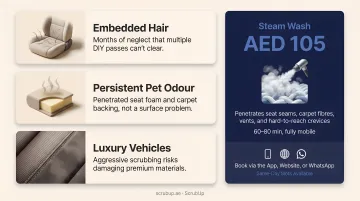
- Heavily embedded hair after months of neglect, where multiple DIY passes haven't cleared it
- Persistent pet odour that has penetrated seat foam and carpet backing — this isn't a surface problem and won't respond to surface cleaning
- Luxury vehicles where aggressive scrubbing risks damaging premium leather, Alcantara, or perforated seat materials
Those situations call for tools and methods that go further than any DIY approach can.
What professional cleaning adds beyond DIY:
Professional-grade vacuums produce substantially higher suction and airflow than consumer units. Steam cleaning operates at temperatures that break down odour-causing bacteria and dander trapped within fabric fibres, not just on the surface, in a way that brushing and vacuuming cannot reach.
For Dubai residents, ScrubUp's Steam Wash (AED 105) covers exactly this. Using high-temperature steam, it penetrates seat seams, carpet fibres, vents, and hard-to-reach crevices to eliminate odours and sanitise surfaces without soaking the interior.
The service is fully mobile. ScrubUp comes to your parking spot, brings all equipment, and requires nothing from your end — no drive to a detailing shop, no wait time. Book via the app, website, or WhatsApp, with same-day slots available. For busy pet owners who want a deep clean done properly, it's the simpler option.
Frequently Asked Questions
What do car detailers use to remove pet hair from cars?
Professional detailers typically use rubber pet hair brushes or rakes to loosen and clump embedded hair, followed by high-powered wet/dry vacuums to extract it. Steam cleaning is then used to sanitise fabric, eliminate odour-causing dander, and reach fibres that mechanical tools can't access.
Does vacuuming alone remove pet hair from car seats?
Standard vacuuming removes loose surface hair but is largely ineffective on embedded strands. A rubber tool must be used first to lift hair from the fibre roots — once hair is clumped and raised, a second vacuum pass becomes genuinely effective.
What is the best tool for removing pet hair from car carpet?
Dedicated rubber pet hair brushes or rakes consistently outperform other options for car carpet. Their friction and mild electrostatic effect pull hair up from deep pile fibres into clumps that can then be vacuumed. Lint rollers and tape work only on surface hair.
Can pet hair damage car upholstery over time?
Hair itself causes minimal direct damage, but the dander, oils, and moisture it carries can degrade both fabric and leather over time. Leather's microscopic pores absorb these compounds, creating persistent odours that become very difficult to remove once they've set in.
How do I get pet hair out of hard-to-reach areas in my car?
These zones accumulate the densest hair and respond poorly to wide-head vacuuming. Match the right tool to each area:
- Vacuum crevice attachment for seat seams and rails
- Soft detailing brush or compressed air for vents and narrow gaps
- Rubber-tipped tool for seat backs and corners
Does fabric softener help remove pet hair from car interiors?
A diluted fabric softener spray reduces static charge on cloth surfaces, making stubborn hair easier to wipe away. Apply as a light mist and follow with vacuuming — it works as a pre-treatment aid, not a standalone solution.