This guide covers why urine smell is so difficult to remove, a proven step-by-step process for fabric, leather, and rubber surfaces, the mistakes that make things worse, and when DIY genuinely isn't enough.
Key Takeaways
- Urine smell persists because uric acid crystals resist ordinary water and surface cleaners
- Blotting (not rubbing) keeps urine from soaking deeper into seat foam — a step most people skip
- Enzyme-based cleaners are the most effective DIY option; they break down odor compounds rather than masking them
- Dubai's cabin heat accelerates odor — untreated urine smells far worse by afternoon
- Steam treatment is the most reliable fix once contamination reaches the foam layer
Why Urine Smell Is So Hard to Remove from Cars
Most people try wiping the seat with a damp cloth and calling it done. The smell returns within hours, often stronger than before. There's a chemical reason for that.
Urine contains uric acid, ammonia, and proteins. When urine dries, uric acid forms crystals that bind tightly to fabric fibers and foam padding. Research confirms that uric acid has low solubility in standard solutions, which is why plain water rarely dissolves it fully. The crystals stay embedded in seat fabric and foam padding even after the surface appears dry.
Ammonia compounds the problem further. Higher temperatures accelerate ammonia volatilization, releasing more odor into the air as the car heats up. In Dubai's climate, that's not a minor concern.
The Dubai Heat Factor
This matters a lot in Dubai. A Gulf-region study conducted in Oman recorded peak cabin air temperatures of 66°C at 2:00 PM during summer, with average ambient temperatures around 43°C. The Dubai Health Authority notes that Gulf daytime temperatures regularly reach 38°C to 42°C between May and September.
At those cabin temperatures, even a small urine residue that seems manageable in the morning can become overwhelming by early afternoon. The heat accelerates ammonia release and reactivates dried compounds that seemed odorless when cool.
Masking vs. Eliminating
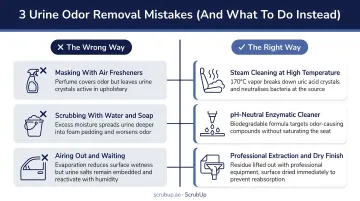
Air fresheners and generic car sprays add a new scent on top of the existing odor compounds — the uric acid crystals remain untouched underneath. When the car heats up again, the smell returns. True removal requires breaking down those compounds chemically, not covering them.
Step-by-Step: How to Remove Urine Smell from Your Car
What You'll Need
Gather these before starting:
- Enzyme-based cleaner (non-negotiable for effective odor removal)
- White microfiber cloths or paper towels
- Baking soda
- White vinegar
- Spray bottle
- Vacuum
- Rubber gloves
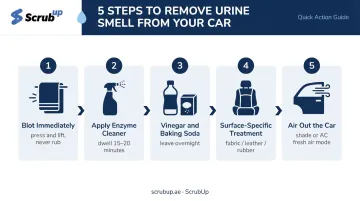
Step 1: Act Immediately and Blot
Use dry paper towels or a clean microfiber cloth to absorb as much liquid as possible. Press and lift — never rub.
Rubbing spreads urine outward across a larger area and pushes it deeper into the seat padding, which significantly expands the contaminated zone. The goal is extraction, not distribution.
Step 2: Apply an Enzyme-Based Cleaner
Enzyme cleaners contain biological catalysts that break down the organic compounds in urine, including the proteins and ammonia derivatives responsible for the smell. Standard cleaning products mask odor; enzyme cleaners eliminate the source.
Apply generously to the full affected area, not just the visible stain. Urine spreads beyond what the eye can see. Allow the cleaner to dwell for 15–20 minutes before blotting. This contact time is critical: the enzymes need it to work through the material properly.
Step 3: Vinegar and Baking Soda Follow-Up
Spray a 50/50 white vinegar and water solution over the treated area. Acetic acid in the vinegar neutralizes ammonia residue, reducing the sharp odor that lingers on the surface.
Once the area is nearly dry, cover it with a generous layer of baking soda and leave it for several hours or overnight. Vacuum thoroughly when done.
Step 4: Surface-Specific Treatment
Different surfaces need different approaches:
Fabric seats and carpet:
- The above steps apply directly
- For old stains, dampen the area slightly with cool water before re-applying the enzyme cleaner — this reactivates dried compounds so the enzymes can reach them
- The cleaner must penetrate to the foam cushion layer, not just the surface fabric
Leather and vinyl seats:
- Never saturate leather directly with liquid cleaners. COLOURLOCK UAE specifically advises against over-wetting perforated leather
- Apply enzyme cleaner to a microfiber cloth first, then gently blot the stained area
- Check your product label before applying: some enzyme cleaners (including Nature's Miracle Urine Destroyer) explicitly exclude leather
- Wipe with a slightly damp cloth and finish with a leather conditioner to restore texture
Rubber floor mats:
- Remove from the car entirely
- Rinse with cool water, apply enzyme cleaner directly, scrub gently
- Allow to air dry fully before replacing — these are the easiest surface to treat
Step 5: Air the Car Out Properly
After cleaning, leave windows open in a shaded spot or run the AC on fresh air mode. In Dubai's humidity, a damp interior will develop a secondary mold odor quickly. Full drying matters as much as the cleaning itself — don't skip it.
Common Mistakes That Make Urine Smell Worse
These three errors are extremely common and each one makes the problem harder to fix:
- Using hot water: Heat sets protein-based stains and binds them deeper into fibers. Kansas State Extension advises against hot water on protein stains — always use cool or lukewarm water.
- Scrubbing instead of blotting — Chemical Guys advises blotting over rubbing car seat stains. Rubbing spreads contamination and damages fabric texture. The same logic applies to urine.
- Relying on air fresheners: Products labeled "deodorizer" or "freshener" are designed to mask odors, not remove them. Look specifically for labels saying "enzyme cleaner" or "odor neutralizer." Anything else is a temporary cover-up that will fail when the car heats up.
When to Stop DIYing and Call a Professional
There's a clear threshold where DIY stops working.
If urine has fully saturated the foam cushion beneath the upholstery, blotting and surface-applied enzyme cleaners cannot reliably reach the contamination source. The fabric surface may smell clean while the foam underneath remains saturated. If the smell returns within a day or two after thorough cleaning, that's the most reliable sign the contamination is deeper than the surface.
Professional Steam Treatment
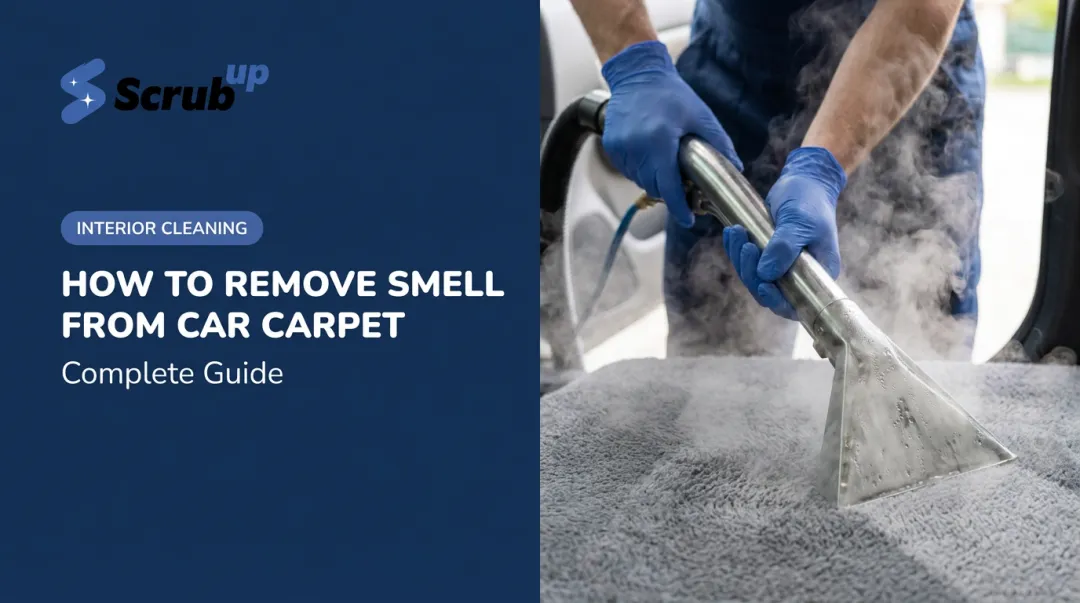
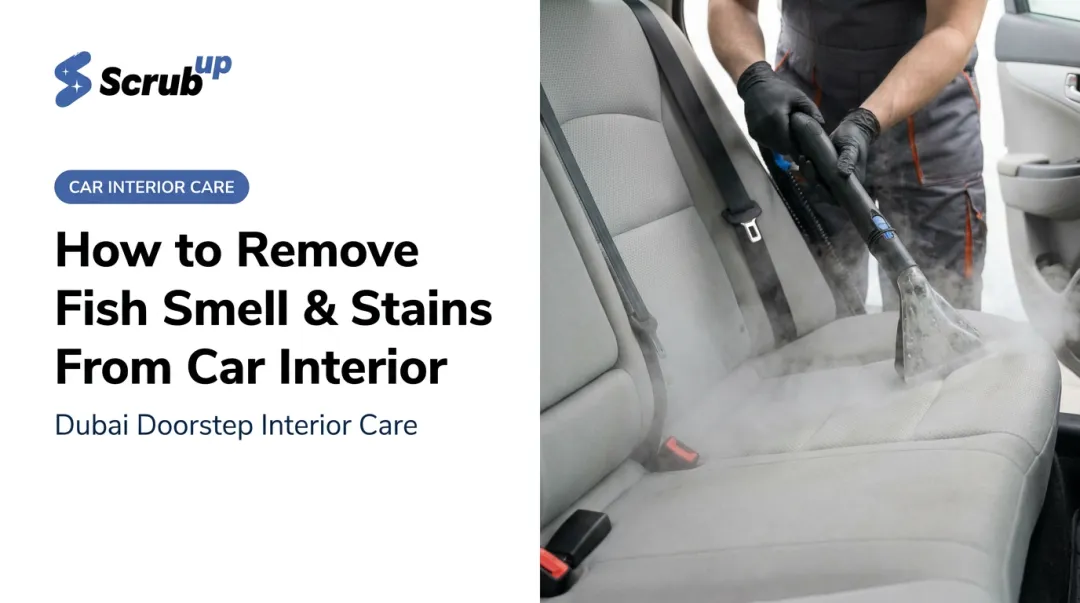
High-temperature steam is the most effective solution for deep urine contamination. Steam kills odor-causing bacteria and works into seams, trims, and fabric layers that spray-applied cleaners cannot always penetrate.
ScrubUp's Steam Wash runs at 170°C controlled vapor, which is hot enough to kill bacteria and neutralize odor at the source. At AED 105, it covers:
- Fabric and leather seats
- Carpets and rubber mats
- Dashboard vents and trim
- Hard-to-reach crevices throughout the cabin
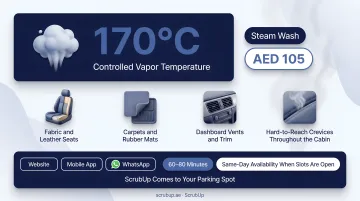
For Dubai residents, ScrubUp comes to your parking spot — no driving to a detailing shop, no queues. The service runs 60–80 minutes and is bookable via the ScrubUp website, mobile app, or WhatsApp, with same-day availability when slots are open.
How to Stop Urine Smell from Coming Back
Two practical measures prevent the problem from recurring:
- Blot immediately — Absorb as much liquid as possible within the first few minutes. Fresh urine is far easier to neutralize than dried crystals that have already bonded to fabric fibers.
- Waterproof seat covers — For cars that regularly carry children or pets, a waterproof cover with a non-slip backing stops urine from reaching the seat foam entirely. Much easier to wash than a full car seat.
- Glove compartment emergency kit — Pack a travel-size enzyme cleaner, two or three microfiber cloths, and a small zip-lock bag for used cloths. Having it on hand means you can treat the accident on the spot rather than waiting until you reach a detailing shop — by which point the urine has already dried.
Frequently Asked Questions
What gets rid of urine smell in a car?
Enzyme-based cleaners are the most effective DIY option because they chemically break down uric acid, proteins, and ammonia compounds rather than masking them. Follow up with a baking soda treatment overnight and proper ventilation for best results.
Does dried urine smell go away on its own?
No. Uric acid crystals remain embedded in fabric and foam and continue releasing odor, especially as the car heats up in the sun. Active treatment with an enzyme cleaner is required; the smell does not dissipate without intervention.
How do you get urine smell out of car seats without an enzyme cleaner?
The baking soda and white vinegar method is the best alternative. Apply a vinegar-water solution first to address ammonia-based odors, then cover with baking soda overnight. This approach is less effective on old or deep stains than enzyme-based products.
How long does urine smell last in a car if untreated?
Untreated urine smell can persist indefinitely and often worsens over time as bacteria multiply and heat reactivates dried compounds. In Dubai's summer temperatures — regularly hitting 45°C — an ignored stain can become noticeably stronger within a single day.
Can I use baking soda on leather car seats?
Use it cautiously. A light application is unlikely to cause immediate damage, but baking soda should not sit on leather for extended periods. For leather, apply enzyme cleaner to a microfiber cloth rather than directly to the seat, and follow with a leather conditioner afterward.
Does steam cleaning remove urine smell from car seats?
Professional steam cleaning is highly effective, especially when urine has penetrated foam padding. High-temperature vapor kills odor-causing bacteria and reaches areas that surface-applied cleaners cannot, making it the most reliable fix for deep contamination.