Fish smell is one of the hardest car odours to eliminate because fish proteins and fluids seep into porous surfaces — fabric seats, carpet fibres, foam padding — at a molecular level. The compound responsible, trimethylamine (TMA), bonds aggressively with organic material and doesn't respond to air fresheners or a quick wipe-down.
This guide covers why fish smell is so persistent, a step-by-step removal process that actually works, which home remedies are worth your time, common mistakes to avoid, and when professional help is the only real solution.
Key Takeaways
- Fish smell comes from TMA, a compound that binds to fabric as fish proteins break down
- Dubai's heat dramatically accelerates this process; act within the first hour if possible
- The correct order matters: source removal → stain treatment → deep cleaning → deodorisation
- Use baking soda or white vinegar for fresh odours; enzyme cleaners for older, deeper smells
- Persistent odours embedded in foam or HVAC systems need professional steam treatment
Why Does My Car Smell Like Fish?
The Chemistry Behind the Smell
Marine fish contain a compound called trimethylamine N-oxide (TMAO). After a fish dies, bacterial and enzymatic activity converts TMAO into TMA, the molecule responsible for that characteristic rotting-fish odour. Fresh fish has a water activity level of 0.98 to 0.99 and a pH above 6, creating ideal conditions for rapid microbial growth.
TMA doesn't just sit on surfaces; it binds to fabric fibres and foam at a chemical level. Air fresheners never solve it — they only mask it temporarily.
The Dubai Heat Factor
According to Arizona State University's 2018 desert-climate study, cars parked in direct sun for just one hour reached average cabin temperatures of 116°F (47°C). UAE summer conditions (documented by RoadSafetyUAE as involving extreme heat and humidity) create comparable or worse conditions inside parked vehicles.
Two key numbers put this in perspective:
- 90°F (32°C): The threshold above which FoodSafety.gov says perishable seafood should not be left out for more than one hour
- 116°F (47°C): The average cabin temperature reached inside a sun-parked car within one hour

In a Dubai car in summer, even a small fish spill can reach noticeable intensity within hours, not days.
Other Causes That Mimic Fish Smell
Not every fishy smell comes from actual fish. Before you start cleaning upholstery, identify the correct source:
- Coolant/antifreeze leak: Car and Driver identifies a sweet aroma after engine shutdown as a possible antifreeze leak, which can intensify inside the cabin if the heater core is affected. This is a mechanical issue — a mechanic, not a car cleaner, is the right call
- Mould or mildew: A musty, fishy smell combined with damp carpets usually indicates moisture trapped under seats or floor mats; the EPA confirms mould grows wherever moisture is present
- Dead rodent: A very specific, location-fixed stench that worsens over days — check the engine bay and blower motor area
Getting the source right matters: cleaning your upholstery while a coolant leak continues into your HVAC will not solve the problem.
Step-by-Step: How to Remove Fish Smell and Stains
Sequence matters here. Deodorising before physically removing contaminated material seals the odour in — skip ahead and you'll trap the smell deeper into fabric.
Step 1: Remove the Source Completely
Inspect every recess carefully: under seats, inside door pockets, the boot, beneath floor mats, and inside storage compartments. Look for fish wrappers, spilled cooler water, loose scales, or forgotten bait bags. Wear gloves, seal all removed waste in a bag, and dispose of it immediately.
If the smell is stronger when the fan is running or comes specifically from the vents, the issue may be HVAC-related rather than a physical spill on the floor.
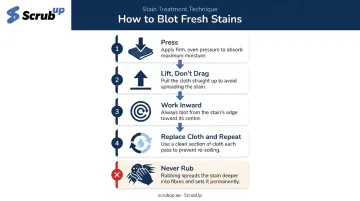
Step 2: Blot — Never Rub — Fresh Stains
The Carpet and Rug Institute confirms that blotting uses liquid wicking to pull stains out, while vigorous rubbing embeds material deeper and can permanently damage fabric texture. For fresh fish stains:
- Press a clean microfiber cloth or paper towel firmly onto the stain
- Lift — don't drag or scrub
- Work from the outer edge of the stain inward
- Replace the cloth as it absorbs liquid and repeat
For leather seats, use a dry cloth and avoid saturating the surface. Leather absorbs moisture quickly and can crack if over-wetted or exposed to acidic cleaners without conditioning afterward.
Step 3: Deep Clean Affected Surfaces
For fabric seats and carpet:
- Apply a pH-neutral upholstery cleaner (or a mild dish soap and warm water solution) using a soft-bristled brush
- Work in gentle circular motions; allow it to sit for a few minutes
- Blot dry, then use a wet-dry vacuum to extract residue from deeper fibres
For hard surfaces (dashboard, door panels, trims):
- Wipe down with a damp microfiber cloth and an all-purpose interior cleaner
- Fish splash travels further than you'd expect, so check all surfaces in the affected area, not just the visible stain
Step 4: Treat the Ventilation System
If the smell intensifies when you turn the fan on, odour molecules have worked their way into the HVAC system.
- Switch the AC to recirculate mode
- Spray an enzyme-based or activated charcoal odour spray directly into the cabin air intake (usually at the base of the windscreen)
- Run the fan on high for 10 minutes
Your cabin air filter deserves a check here too. Denso and MANN-FILTER confirm that activated charcoal filters trap gases and odours effectively, but a filter saturated with fish particles will recirculate the smell every time the AC runs. If yours hasn't been replaced recently, now is the time.
Step 5: Deodorise and Neutralise
Baking soda method:
- Sprinkle generously over all fabric surfaces — seats, mats, carpet
- Leave for several hours or overnight
- Vacuum thoroughly
- For concentrated zones, mix into a paste with water and apply directly to the stain
White vinegar method:
- Place a shallow bowl of undiluted white vinegar in the closed car for several hours or overnight
- Vinegar (acetic acid) chemically neutralises TMA, a basic amine, converting it into less volatile salts rather than masking it
- Open all doors afterward; the vinegar scent dissipates within an hour
Step 6: Ventilate Thoroughly
After cleaning and deodorising:
- Open all doors and windows for at least one to two hours
- Park in shade if possible; baking residual moisture back into fabric undoes your work
- Run the AC on fresh air (non-recirculate) mode for 10–15 minutes to flush the ventilation system
- Assess whether the smell is fully gone before declaring the job done
Home Remedies That Actually Work
The distinction that matters here: masking (air fresheners, perfumes) versus eliminating (chemical neutralisation or absorption). Only the latter solves the problem.
Baking Soda
Baking soda is a weak base that neutralises acidic odour compounds through acid-base reactions. However, McGill University notes that TMA is itself a basic amine, meaning baking soda's chemistry is more direct against acidic odours than fishy ones. It's still useful because it physically absorbs moisture, which is the carrier medium for most odours. One PubMed-indexed study found 50g of baking soda reduced odour by approximately 70% in an organic-waste container. Treat it as a useful support tool, not a complete solution for older smells.
White Vinegar
Acetic acid protonates TMA into a less volatile, less smelly salt; the chemistry genuinely supports this. Place undiluted vinegar in a bowl in the closed car, or dilute with water and spray directly onto fabric. The vinegar scent dissipates within 30–60 minutes with the windows open. Avoid using vinegar directly on leather without dilution and follow immediately with a pH-neutral leather conditioner.
Enzyme Cleaners
For stubborn or older fish odours, enzyme cleaners are the most targeted option. Proteases break down fish proteins; lipases target fish oils. Both directly address the organic residue that surface cleaning misses. Products like those from Superior Products and Ozymes are formulated specifically for automotive fabric and leather. Always test on an inconspicuous area first, particularly on leather, as some enzyme formulations are not safe for all leather types.
Activated Charcoal and Essential Oils
Both work best as finishing touches after the odour source is eliminated:
- Activated charcoal sachets: Place under seats to absorb trace lingering odour over several days
- Essential oils: Tea tree or eucalyptus on a cotton ball near a vent provides mild residual freshness. Use only after cleaning is complete, not as a substitute for it
When Home Remedies Are Not Enough
Fish fluids that have penetrated deep into seat foam, carpet underlay, or HVAC ducting cannot be fully addressed by surface treatment. The foam backing under car carpet dries slowly, and the EPA notes that wet materials not dried within 24 to 48 hours risk mould growth, which compounds the original odour problem.
When the smell has gone that deep, professional steam treatment is the reliable next step. ScrubUp's mobile Steam Wash uses controlled vapour at 170°C to penetrate seams, fabric fibres, vents, and hard-to-reach crevices, sanitising the cabin and eliminating odour-causing bacteria rather than masking them.
The service covers seats, mats, and interior surfaces using biodegradable, pH-neutral products safe for fabric, carpet, and leather. It comes to your residential or office parking anywhere across Dubai, including gated communities and basement parking, bookable via the ScrubUp app, website, or WhatsApp.
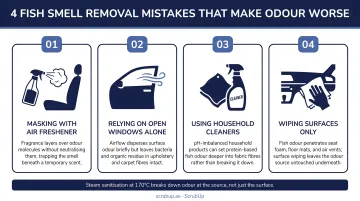
Common Mistakes That Make Fish Smell Worse
Most people's instinct is to act fast — but the wrong first move can lock that smell in for weeks. Here's what to avoid:
| Mistake | Why It Makes Things Worse |
|---|---|
| Rubbing fresh stains | Drives fish proteins deeper into fabric weave and foam padding |
| Using air fresheners first | Layers artificial scent over the embedded odour — the combination is worse than either alone |
| Over-wetting upholstery | Saturates foam padding, which dries slowly and becomes a breeding ground for mould |
| Ignoring the HVAC system | Cabin air filter retains fish particles and recontaminates the air every time the AC runs |
How to Prevent Fish Smell From Returning
A spill handled in five minutes beats an hour of deep cleaning every time.
Transport fish correctly:
- Use a sealed, airtight cooler with ice packs — general food safety guidelines recommend keeping fresh seafood at 4°C or below during transport
- Wrap fish in butcher paper or newspaper first to absorb excess fluid before bagging
- Never place fish directly on carpet or boot liner without a waterproof base
Keep a spill kit in your car: Pack paper towels, a microfiber cloth, and a small bottle of mild cleaner. Responding within five minutes stops odour compounds from soaking into carpet fibres.
Schedule regular interior cleaning: Odour compounds and bacteria build up in seat fabric and carpet over time — even without visible spills. ScrubUp's Steam Wash (AED 105) uses high-temperature vapour and biodegradable products to sanitise your interior, and comes directly to your parking space anywhere in Dubai.
Frequently Asked Questions
How long will fish smell last in my car if untreated?
Untreated fish smell can linger for weeks — TMA, the compound responsible, keeps releasing as residue decomposes. With prompt, thorough cleaning, the smell can be fully eliminated within 24 to 48 hours.
Can baking soda really remove fish smell from car seats?
It helps with fresh or mild odours by absorbing moisture and providing some neutralisation. For older or deeply embedded smells, combine it with an enzyme cleaner for effective treatment — or consider professional steam cleaning for foam-penetrating odours.
How do I remove fish smell from leather car seats specifically?
Blot the spill immediately, then clean with a pH-neutral leather-safe cleaner such as Autoglym Leather Cleaner. Apply a diluted white vinegar solution to neutralise odour, follow with a leather conditioner, and avoid enzyme cleaners unless the product confirms leather compatibility.
Why does my car still smell like fish after cleaning?
Lingering odour after surface cleaning almost always means it has penetrated seat foam, carpet underlay, or the HVAC system — areas surface cleaning cannot reach. The solution is wet-dry vacuum extraction, cabin air filter replacement, and professional steam treatment for severe cases.
Will opening the windows be enough to remove fish smell?
Ventilation reduces surface-level odour temporarily but cannot eliminate smell absorbed into upholstery. Open windows help at the start and finish of the process, but physical cleaning and deodorisation must happen in between.
Can fish stains leave permanent marks on car upholstery?
Yes, particularly on light-coloured fabric. Fish proteins can bond with fabric fibres and oxidise over time, causing discolouration. Immediate blotting and cleaning significantly reduces this risk — delay is the primary cause of permanent staining.