Petrol fumes are flammable and contain volatile hydrocarbons that cause headaches, dizziness, and nausea even at relatively low concentrations. According to NIOSH, gasoline has a flash point of -45°F — meaning vapour can ignite well below room temperature. A smell you dismiss as a minor inconvenience could indicate something that needs immediate attention.
The key question is: where is the smell coming from? It's either a surface spill you can clean up yourself, or a mechanical fault that requires a qualified mechanic. Those two situations call for very different responses — and confusing one for the other wastes time at best, creates a safety hazard at worst.
This guide walks through how to identify the source, remove the smell using proven DIY methods, when to call a professional, and how to stop it happening again.
Key Takeaways
- Petrol smell comes from two distinct sources — surface spills or fuel system faults — and identifying which determines the right fix
- Surface spills respond well to baking soda, dish soap, and thorough ventilation
- Mechanical causes (fuel leaks, faulty caps, EVAP faults) require a qualified mechanic — address these promptly
- Petrol fumes are flammable and toxic — ventilate your car immediately if the smell is strong
- Deep odours soaked into upholstery or carpet often need professional steam cleaning to fully eliminate
What Causes Petrol Smell in a Car?
Petrol smell in a car falls into two broad categories: surface or exterior causes, and internal mechanical faults. Identifying which type you're dealing with determines everything about how you respond.
- Surface causes: Petrol drops on your clothing, shoes, the exterior near the filler cap, or inside the boot from a transported container. These smells are strong in an enclosed cabin but fade with cleaning and ventilation.
- Mechanical causes: Fuel system faults — loose fuel caps, leaking fuel lines, EVAP system problems — where vapour or liquid petrol is escaping from the fuel system itself. These smells don't go away with airing out.
Using Timing as a Diagnostic Signal
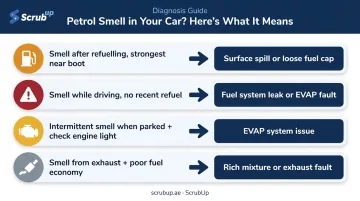
When and where the smell occurs is your first diagnostic clue:
- Smell appears immediately after refuelling, strongest near the boot → likely a surface spill or loose fuel cap
- Smell present while driving, regardless of recent refuelling → points toward a fuel system leak or EVAP fault
- Intermittent smell when parked or warming up, with a check engine light → EVAP system issue
- Petrol smell from the exhaust, poor fuel economy → rich fuel mixture or exhaust system fault
Dubai's climate makes all of this worse. Research on fuel permeation shows that evaporation rates roughly double for every 10°C rise in ambient temperature. A minor spill that would barely register in a cooler climate can fill a sealed cabin with fumes at 40°C+.
Common Sources of Petrol Smell in a Car
Once you know what to look for, most petrol smells follow predictable patterns.
Petrol Spill During Refuelling
Symptoms: Smell appears immediately after a trip to the station; strongest near the boot or around the filler cap area.
Cause: Small drops of petrol landed on clothing, shoes, the car exterior near the filler, or inside the boot. Even a tiny amount creates an intense smell inside a sealed cabin — especially in the heat.
Loose or Damaged Fuel Filler Cap
Symptoms: Consistent but mild smell after refuelling and while driving; a check engine light or "Tighten Fuel Cap" warning may appear.
Cause: The fuel cap isn't sealing properly, allowing petrol vapours to escape from the tank. A cracked, cross-threaded, or not fully tightened cap is one of the most common — and most overlooked — causes. If the cap wasn't the issue, a malfunction indicator lamp will typically activate.
Fuel System Leak (Lines, Injectors, or Pump)
Symptoms: Strong, persistent smell while the engine is running; visible wet patches or stains under the car; smell doesn't clear after airing out.
Cause: A crack, corrosion, or wear in fuel lines, injector seals, or the fuel pump allows liquid petrol to escape — a direct fire hazard. EPA MOVES4 data shows around 70% of evaporative leaks stem from system deterioration, including corroded lines and cracked hoses. If you see wet fuel under the car, do not start the engine.
EVAP System Fault or Faulty Charcoal Canister
Symptoms: Intermittent smell when parked or during warm-up; check engine light is typically triggered.
Cause: The EVAP system captures fuel vapours through an activated charcoal canister and routes them back into the engine. When the canister saturates or a leak develops, those vapours escape into the cabin instead. This is a mechanical fault — DIY cleaning won't resolve it.
Rich Fuel Mixture or Exhaust Issue
Symptoms: Petrol-like smell from the exhaust at startup or idle; rough running; reduced fuel efficiency.
Cause: An overly rich fuel mixture (excess fuel relative to air) from a faulty injector or sensor sends unburnt fuel into the exhaust. A failing catalytic converter can contribute to this smell too. Both warrant a mechanic visit.
How to Remove Petrol Smell from Your Car: Step-by-Step
Before you start: These steps only apply once you've ruled out a mechanical fault. Cleaning the interior while a fuel leak is active is both ineffective and dangerous. If the smell is strong, present while driving, or accompanied by a check engine light, skip to the mechanic section below.
Step 1: Ventilate the Car Immediately
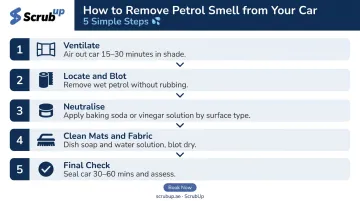
Open all doors, windows, and the boot. Let the car air out for at least 15–30 minutes before touching anything. In Dubai, do this in a shaded or covered parking area — full sun will make the cabin temperature worse and increase vapour concentration.
If the smell is strong and you're unsure of the cause, don't start the engine. Get out, move away from the car, and call a mechanic.
Step 2: Locate and Remove the Source
Check the most likely contamination points:
- Boot floor near the filler cap
- Floor mats and carpet near entry points
- Seat fabric, if you transported a petrol container
Blot wet areas with paper towels — don't rub. Rubbing pushes the liquid deeper into fibres and spreads the contamination. Remove as much liquid petrol as possible before applying any cleaning agent.
Step 3: Neutralise with Household Agents
For carpet and upholstery:
- Sprinkle a generous layer of baking soda over affected areas
- Leave for several hours — ideally overnight
- Vacuum thoroughly
For hard surfaces (plastic trim, boot liner):
- Mix equal parts white vinegar and water
- Apply with a cloth and wipe down
- Avoid using this on leather seats — acidic cleaners can dry out leather; use a manufacturer-recommended leather cleaner instead
For lingering vapour in the cabin:
- Place activated charcoal pouches inside overnight; charcoal absorbs fuel vapours effectively and is safe to leave in an enclosed cabin
Step 4: Clean Floor Mats and Fabric Surfaces
Remove all floor mats and wash them outdoors using warm water and dish soap. Its surfactants break down oily residue, making it one of the more effective DIY options for petrol contamination.
For fabric seats or carpet, use this method:
- Mix warm water, mild dish soap, and a small amount of white vinegar
- Work the solution into the affected area with a soft brush
- Blot clean with a dry cloth — don't rub
A mild detergent diluted to around 5% in water is safe for most upholstery. Avoid harsh solvents.
Step 5: Steam Cleaning for Deep, Persistent Odours
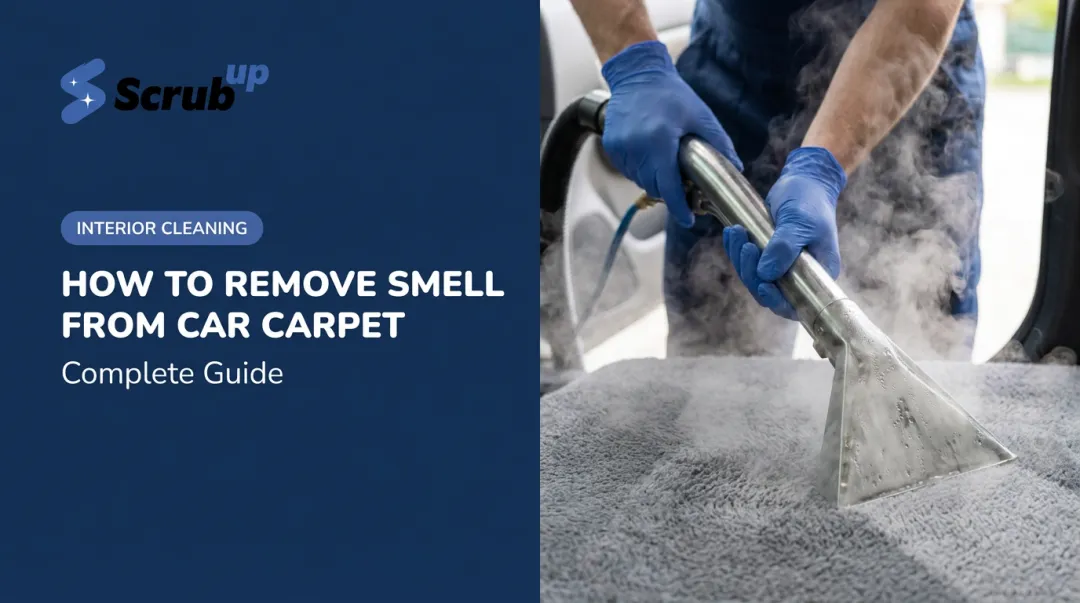
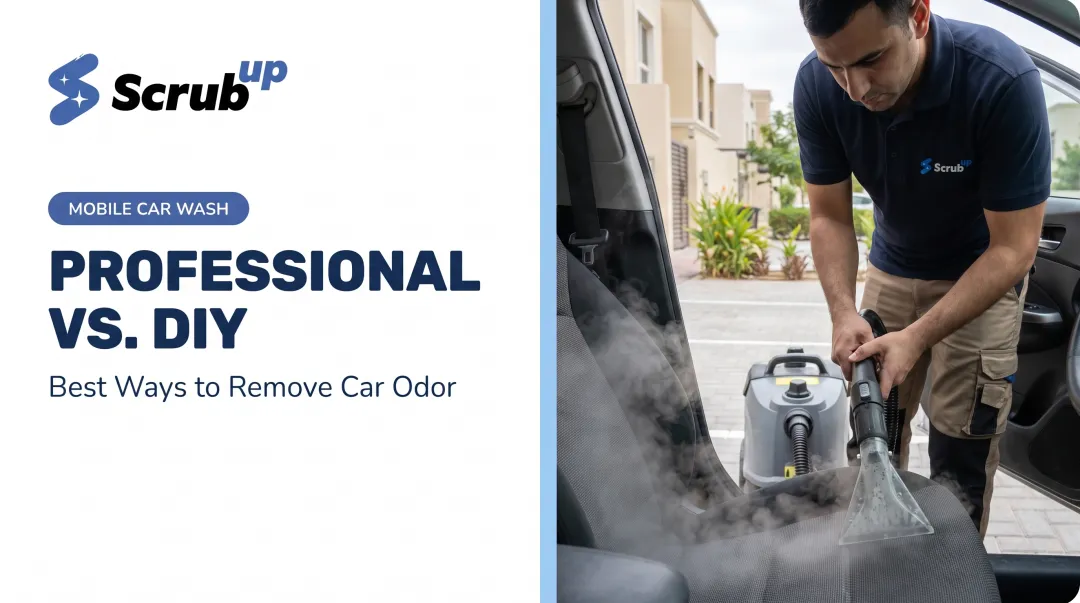
When the smell has soaked deeply into upholstery, carpet, or headlining, surface-level cleaning won't fully reach it. High-temperature steam penetrates fabric fibres and targets the residue causing the odour at its source, making it the most thorough option for persistent cabin odours.
ScrubUp's mobile Steam Wash service brings this directly to your parking spot across Dubai. It covers interior steam cleaning of seats, mats, dashboards, and vents, plus vacuuming and air freshener, for AED 105 with no need to drive anywhere.
It's a practical next step when DIY methods have reduced the smell but haven't fully cleared it. Book via the ScrubUp app (iOS or Android), at book.scrubup.ae, or through WhatsApp.
Step 6: Final Check
After cleaning and drying, close the car and leave it sealed for 30–60 minutes in a shaded spot. Then open it and check for any remaining smell. If the smell is gone, you're done. If it persists despite thorough cleaning, the source is likely mechanical — move on to the next section.
When to DIY and When to Call a Professional
DIY methods are appropriate when the smell is clearly traced to a surface spill or a loose fuel cap. These are safe to handle without mechanical knowledge.
Call a mechanic if any of the following apply:
- The smell is present while driving with no known spill
- There are wet patches, stains, or drips visible under the car
- The check engine light is on alongside the petrol smell
- The smell doesn't clear after thorough interior cleaning
- The smell is accompanied by rough running or poor fuel economy
A fuel leak near hot engine or exhaust components is a fire risk. Don't attempt to diagnose or drive the vehicle — get it assessed by a qualified mechanic immediately.
For deep interior odours that persist after DIY cleaning, particularly in seats and carpet, professional steam cleaning is the most effective next step. ScrubUp's Steam Wash (AED 105) is a mobile service that comes directly to your building car park across Dubai neighbourhoods — no workshop visit needed.
Common Mistakes to Avoid and How to Prevent Petrol Smell in Future
Mistakes to Avoid
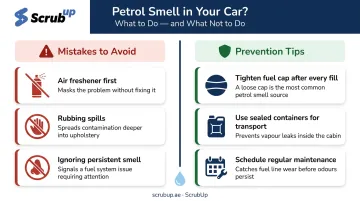
- Reaching for air freshener first — it masks one smell with another but does nothing to remove petrol compounds from fabric or surfaces. Always clean the source before deodorising.
- Rubbing instead of blotting — rubbing a fresh spill spreads it further into fibres and makes the contamination harder to remove.
- Ignoring a persistent smell — if the cause is mechanical, petrol vapours are flammable and inhaling them over time causes headaches, dizziness, and nausea. A smell that won't go away is not a minor nuisance.
Once you know what not to do, the next step is making sure the problem doesn't come back.
Preventive Steps
- Tighten the fuel cap fully after every fill — turn until you hear a click, and check it periodically for cracks or wear. Replace it if damaged.
- Use proper containers when transporting fuel — sealed, purpose-built containers only, placed in a bag to contain any vapour. Never transport open or leaking containers inside the cabin.
- Schedule regular maintenance — worn injector seals, degraded fuel lines, and EVAP faults are far cheaper to fix when caught early. Most evaporative leaks stem from gradual component wear, which routine inspection catches before it becomes a persistent smell or a safety hazard.
Frequently Asked Questions
Why does my car smell like petrol even after filling up?
This is most commonly caused by a loose or improperly sealed fuel cap allowing vapours to escape, or small spills during refuelling that settled near the filler area. Tighten the cap fully until it clicks and check the exterior for any visible spillage.
Is it dangerous to drive with a petrol smell in your car?
It depends on the cause. A faint smell from a minor surface spill is low risk once the car is ventilated. A strong or persistent odour while driving could indicate a fuel leak — which is both a fire hazard and a health risk. Stop driving and get the car checked by a mechanic.
How long does petrol smell last in a car?
A surface spill typically fades within a few hours to a couple of days with proper ventilation and cleaning. Odours absorbed into carpet or upholstery can linger for weeks without active treatment.
What absorbs petrol smell in a car most effectively?
Several options work well depending on how deep the odour has penetrated:
- Baking soda sprinkled on surfaces and left overnight
- Activated charcoal pouches placed inside the car
- Mild dish soap solution applied to fabric surfaces
- Steam cleaning for odours soaked into upholstery or carpet
Can I use baking soda on car seats to remove petrol smell?
Yes — baking soda is safe for fabric seats. Sprinkle generously, leave for several hours or overnight, then vacuum thoroughly. Avoid using it on leather seats, as it can dry them out over time.
When should I take my car to a mechanic for a petrol smell?
Book a mechanic if any of these apply — they point to a fuel system fault rather than a surface issue:
- Odour persists while driving with no known spill
- Visible liquid pooling under the car
- Check engine light is on
- Thorough interior cleaning hasn't resolved the smell