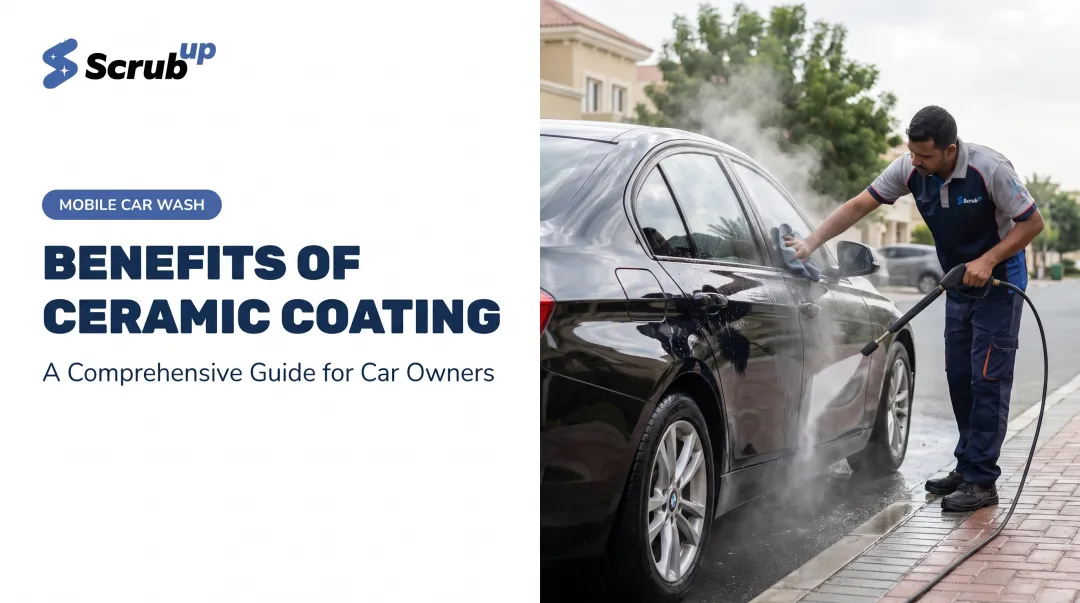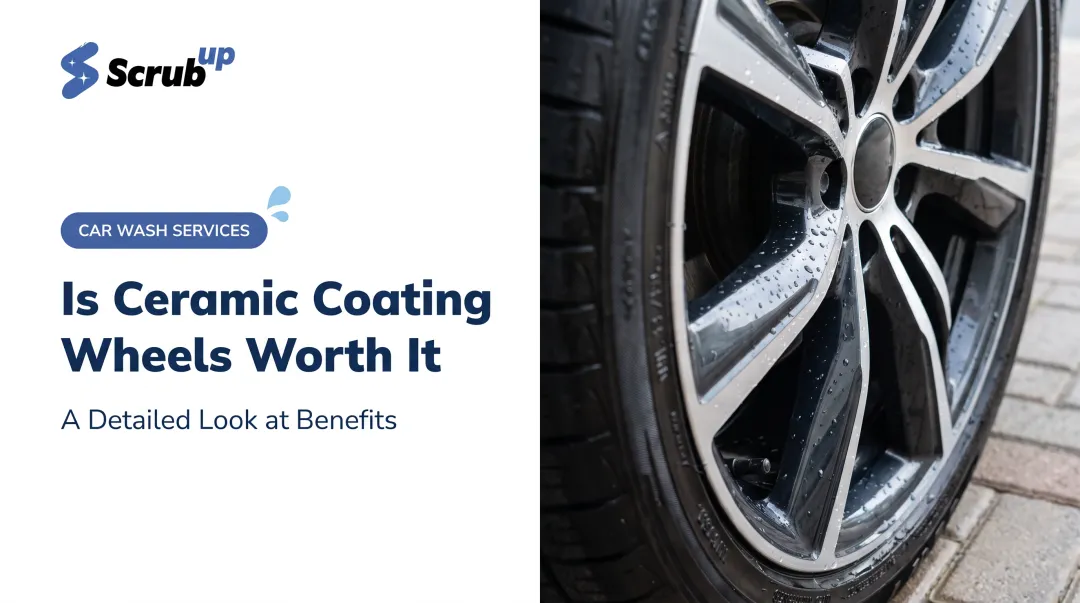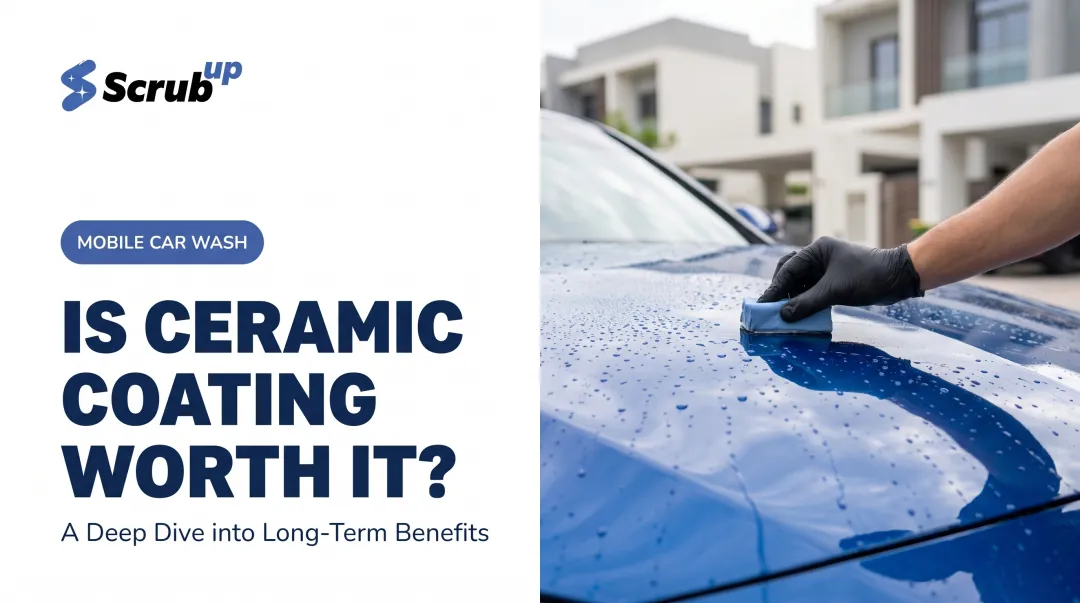
But is it actually worth the premium over a sealant or wax job?
This review breaks down what "9H" really means, how it performs in real Gulf conditions, what it costs in the UAE, and how to make it last.
Key Takeaways
- 9H is a hardness rating, not proof the coating is indestructible
- Quality coatings last 2–5 years depending on product and upkeep
- UAE cost depends on vehicle size and coating brand/tier—compare quotes, not labels
- Regular washing is non-negotiable for preserving hydrophobic gloss
- Ceramic coating cuts wash frequency; it does not eliminate maintenance
What Is 9H Ceramic Coating and How Is It Tested?
Ceramic coating is a liquid polymer built mainly from silicon dioxide (SiO2). Once applied, it chemically bonds with your car's clear coat rather than sitting on top like wax does. That bond is what gives it staying power.
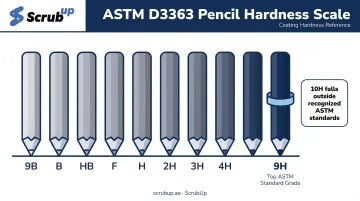
The "9H" rating comes from the ASTM D3363 pencil hardness test, also known as the Wolff-Wilborn method. Technicians press pencils of increasing hardness against the cured coating at a 45-degree angle to see which grade leaves a mark.
A standard kit runs from 9B (softest) to 9H, the top of the conventional scale.
Here's the catch: "10H" isn't a real ASTM grade. Standard pencil hardness kits stop at 9H, so any product marketed as 10H is using language outside the recognised testing standard. Treat it as a marketing term unless the seller can show a documented, alternative test method.
Common Misconceptions to Clear Up
A 9H rating measures resistance to light scratching and marring on a thin film, not the entire paint system. It does not mean:
- Scratch-proof against keys or sharp objects
- Immune to rock chips or road debris impacts
- A shield against dents
Ceramic Pro's own guidance is blunt on this point: a keyed coated panel will still show damage, and deeper scratches can penetrate straight through the coating layer. Think of 9H as a sacrificial, glossy shield for everyday wear, not body armour.
Benefits of 9H Ceramic Coating: What You Actually Get
So what does 9H coating genuinely deliver for a car parked or driven under Gulf sun?
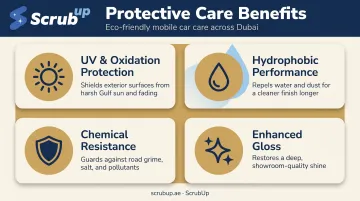
Gulf News has reported that UAE ultraviolet exposure can fade paint and oxidize clear coat until it turns chalky or starts peeling. A 9H coating pushes back on that wear in practical ways:
- UV and oxidation protection: Built-in inhibitors slow fading and chalking so color depth holds up longer
- Hydrophobic performance: Water, dust, and grime bead up and roll off, so less grime bakes onto the paint
- Chemical resistance: Bird droppings, tree sap, and coastal salt sit on the film, giving you more time to clean safely
- Enhanced gloss: The bonded layer adds depth and shine that can support a stronger resale impression
9H Coating vs. Wax: The Durability Gap
Wax sits on the paint surface and typically washes away within weeks. A bonded ceramic coating, by contrast, can survive years of regular washing because it's chemically fused rather than layered on top. That's the core reason coating costs more upfront but saves on repeat applications.
Pairing coating with the right wash matters just as much as the coating itself. A coated car washed with harsh chemicals or automated brushes can lose its hydrophobic edge fast. This is where a mobile service like ScrubUp's pH-balanced foam and steam cleaning helps. It's designed to lift dirt without stripping the coating's protective properties.
Cost and Lifespan of 9H Ceramic Coating in the UAE
Realistic UAE pricing for professional ceramic coating typically falls in the AED 1,000 to AED 5,000 range, according to regional detailing industry benchmarks. Where your vehicle lands in that range depends on:
- Vehicle size (a sedan needs less product and labour than an SUV)
- Number of coating layers applied
- Brand and warranty tier (entry-level packages versus multi-year premium formulations)
- Whether paint correction is needed before application
Ceramic Pro's own UAE tier structure illustrates this well: packages range from a 1-year warranty on entry tiers up to 7 years on top-tier applications. A cheap single-layer job and a fully corrected multi-layer application are not the same purchase.
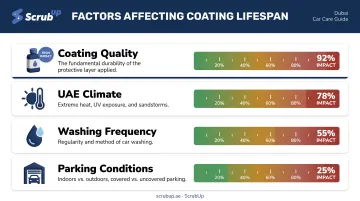
What Actually Affects Longevity
- Coating quality: premium formulations claim 2-5 years; budget products fall short
- UAE climate: sustained heat above 40°C, sand, and humidity all add contamination load
- Washing frequency: manufacturers recommend washing roughly every two weeks
- Parking conditions: covered parking slows UV degradation compared to open-air exposure
DIY Kits vs. Professional Application
| Factor | DIY Kit | Professional |
|---|---|---|
| Upfront cost | Lower | Higher |
| Surface prep | Skipped or minimal | Includes decontamination, correction |
| Application evenness | Inconsistent | Even finish by trained technicians |
| Warranty | Rarely included | Often 1-7 years |
DIY kits can save money initially, but skipping proper surface prep often means the coating bonds poorly and underperforms its rated lifespan.
Is 9H Ceramic Coating Worth the Investment?
Weigh it like this: you're paying more upfront to reduce how often you need paint correction, detailing visits, and deep cleans down the line. For many Dubai drivers, that trade-off pays off.
Who benefits most:
- Daily commuters exposed to dust and sun year-round
- Luxury car owners protecting resale value
- Residents without covered parking access
Who might skip it:
- Owners of older vehicles nearing end-of-life
- Those who rarely drive or park exclusively in covered garages
One point manufacturers are consistent on: coating is not a substitute for washing. Gtechniq and Ceramic Pro both recommend washing roughly every two weeks, and Ceramic Pro's own warranty documentation warns that skipping maintenance can significantly shorten coating life.
Gentle, consistent washing is what protects that investment. Automated tunnel washes use rotating brushes that can leave fine swirl marks over time and dull the gloss you paid for.
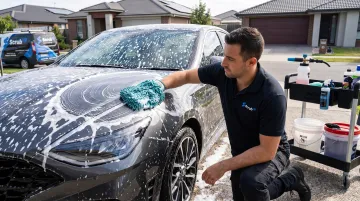
ScrubUp's doorstep mobile wash avoids that risk: controlled pressure jets, high-density foam, and hand-applied microfiber—no rotating brush contact—at your home, office, or building parking, so coating upkeep does not mean an extra trip.
The verdict: worth it for owners seeking long-term protection paired with realistic upkeep. Less essential for vehicles nearing retirement or rarely driven.
Frequently Asked Questions
How much does 9H ceramic coating cost?
Professional application in the UAE typically runs AED 1,000 to AED 5,000, depending on vehicle size, coating brand, and warranty tier. DIY kits cost less upfront but usually skip proper surface preparation.
How long does 9H ceramic coating last?
Quality coatings last 2-5 years, depending on the product, application quality, and how consistently you wash and maintain the car afterward.
Is 9H ceramic coating good?
Yes, it offers strong resistance to light scratches, swirls, and UV fading, plus excellent hydrophobic properties. It's not scratch-proof, so it won't stop keys, rock chips, or deep gouges.
What is the highest rated ceramic coating?
9H is the highest standard grade on the conventional ASTM/Wolff-Wilborn pencil hardness scale. Labels claiming "10H" fall outside this recognized testing method and are largely marketing terms.
Does ceramic coating eliminate the need for regular car washing?
No. Coated cars still need washing roughly every two weeks to preserve hydrophobic performance. A mobile service like ScrubUp helps maintain coated surfaces safely without risking scratches from automated washes.