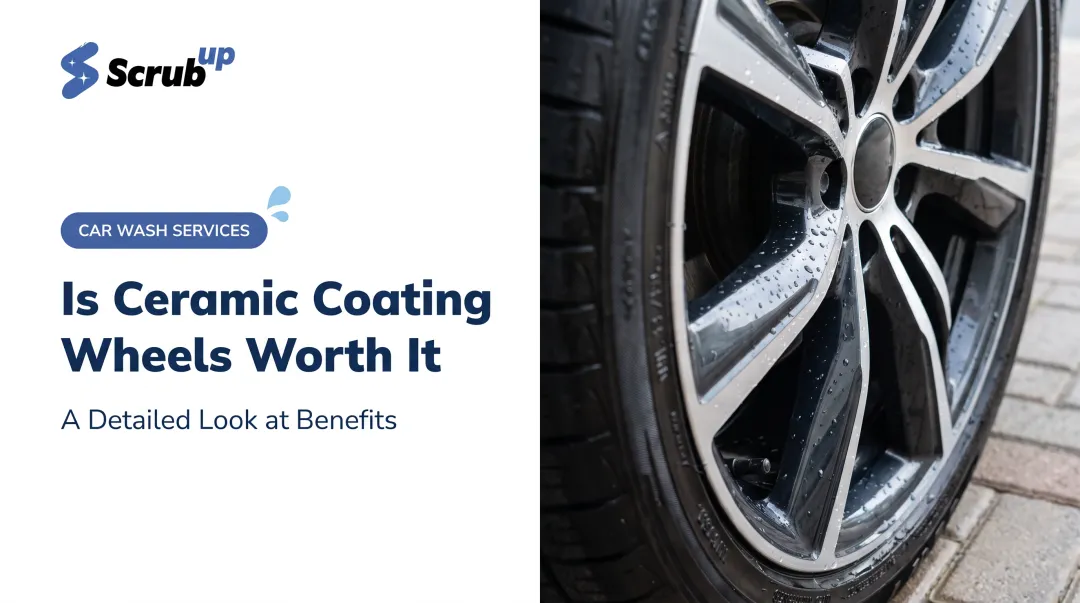
Ceramic coatings for wheels tackle this differently than the paint coatings most people know. Instead of just adding gloss, they create a heat- and grime-resistant barrier engineered for the specific torture wheels endure: brake heat, ferrous dust, and constant road contamination.
This guide compares the top wheel ceramic coatings using the metrics that actually matter here: heat resistance, durability, and how easy they are to apply yourself.
TL;DR
- Wheel ceramic coatings differ from body coatings: they're built for brake heat and dust, not just shine
- Gtechniq C5 and CarPro DLUX publish the clearest heat and durability specs (up to 600°C and 2 years)
- Gyeon Rim EVO claims the highest heat resistance but has inconsistent regional figures
- Armour Wheel Coating discloses the most formulation detail (SiO2%, contact angle) but skips a maximum heat rating
- No coating survives Dubai's climate without regular pH-neutral washing. Maintenance is not optional
Overview of Ceramic Coatings for Wheels
A ceramic coating is a SiO2-based liquid that chemically bonds to a surface, forming a hard, glossy layer meant to last years rather than weeks. Wax, by contrast, sits on top of the surface and needs reapplying every few months.
For wheels specifically, that difference matters more than it does on paint. Wheels face:
- Brake dust that's ferrous, abrasive, and chemically aggressive
- Extreme heat from braking, sometimes exceeding what body panels ever experience
- Road grime and sand that grinds against the surface at speed
This is why a body-formulated ceramic coating often isn't rated for wheel use. It simply wasn't built to handle 500°C+ brake heat cycles.
That stress is amplified in Dubai, where high ambient heat and fine sand add to brake temperatures and surface abrasion. Manufacturers have responded with formulas built specifically for high-temperature, high-abrasion conditions—not just paintwork in mild climates.
Here's how the leading wheel-specific coatings compare.
Top Wheel Ceramic Coatings Compared
We compared each coating on four factors: documented heat resistance, durability claims, hydrophobic performance, and DIY-friendly application.
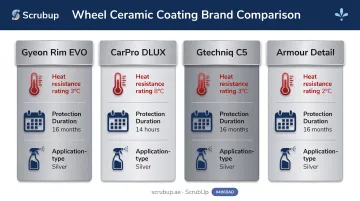
Gyeon Rim EVO Ceramic Wheel Coating Kit
Gyeon built its name on precision detailing formulas, and Rim EVO is its dedicated wheel product. It's designed for tracks and daily driving alike.
Gyeon's global product page claims heat resistance above 800°C, though its US listing states above 1400°F (roughly 760°C), a discrepancy worth noting rather than ignoring. It leaves a satin finish and is marketed for strong brake-dust repellency.
| Metric | Detail |
|---|---|
| Heat Resistance | Above 800°C (global page); regional figures vary |
| Protection Duration | Up to 18 months or 45,000 km |
| Application Type | Liquid, applicator pad, wipe after 10-30 seconds |
CarPro CQuartz DLUX Wheel & Trim Coat
CarPro's DLUX line covers wheels and trim in one product, useful if you want fewer bottles cluttering your garage.
It's rated to about 538°C (1000°F) and contains 50% silica by volume, one of the few brands that discloses this. A single application typically covers all four wheels plus trim pieces.
| Metric | Detail |
|---|---|
| Heat Resistance | Up to ~538°C (1000°F) |
| Protection Duration | Up to 2 years |
| Application Type | Liquid wipe-on, level and remove with microfibre |
Gtechniq C5 Wheel Armour
Gtechniq's C5 Wheel Armour is popular with luxury car owners: straightforward to apply, clearly documented, and easy to maintain.
C5 is rated to 600°C, one of the more conservative but clearly stated figures in this comparison. It's safe on matte and satin finishes, which matters if you've got a factory finish you don't want to alter.
| Metric | Detail |
|---|---|
| Heat Resistance | Up to 600°C |
| Protection Duration | Up to 2 years |
| Application Type | Liquid, AP1 applicator, buff after 30-60 seconds |
Armour Detail Wheel Coating
Armour is a professional-favourite SiO2 quartz coating that discloses more formulation data than most competitors.
It claims 76% SiO2 at 99.9% purity and a >9H hardness rating (though the test method isn't specified). It also claims a 110-degree water contact angle. Notably, Armour doesn't publish a maximum heat rating. Its listed temperature range refers to application conditions, not heat resistance.
| Metric | Detail |
|---|---|
| Heat Resistance | Not disclosed |
| Protection Duration | 24,000+ km or 1+ year |
| Application Type | Crosshatch liquid application, two coats recommended |
Nano Bond Ceramic Coating
Worth flagging: Nano Bond's official catalogue lists general paint-protection coatings and a ceramic spray wax, but no dedicated wheel-specific ceramic coating. Any 9H or high-heat claims you see attached to Nano Bond apply to its general paint products, not a wheel formula. We'd exclude it from a wheel-specific shortlist until that changes.
How We Chose the Best Wheel Ceramic Coatings
The biggest buyer mistake? Assuming any ceramic coating works on wheels. Body-focused formulas usually aren't tested against brake heat, and applying one to your rims can mean premature failure.
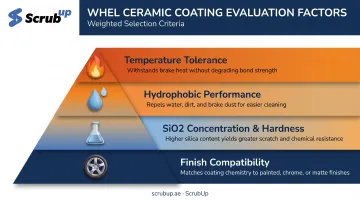
We weighted these factors:
- SiO2 concentration and hardness — useful for transparency, but brands measure it differently (volume, purity, or solids), so it is not a direct ranking tool
- Temperature tolerance — the most wheel-relevant spec; brake heat is the main stress test
- Hydrophobic performance — water contact angle above 90° signals real hydrophobicity; few brands cite a testing standard
- Finish compatibility — matte, satin, and chrome wheels all react differently to coating chemistry
A caution on hardness labels: "9H" ratings typically reference pencil-hardness testing (ASTM D3363), built for relative ranking, not a scratch-proof guarantee. Treat any H-rating as a rough indicator, not a warranty.
Maintaining Your Ceramic-Coated Wheels in Dubai's Climate
Even the best coating degrades fast if your wash routine works against it. Dubai's combination of heat, dust, and fine sand accelerates coating breakdown more than milder climates ever would.
The biggest culprits:
- Washing in direct sun while the wheels are still hot from driving or braking
- Harsh, high-pH detergents that strip the coating's hydrophobic layer
- Unrestricted high-pressure jets aimed directly at the coated surface
Gyeon and Gtechniq guidance lines up on the same basics:
- Use pH-neutral shampoo
- Wash only after the car has cooled
- Clear brake dust regularly instead of leaving it for weeks
Routine matters more than which coating brand you chose. A mobile wash like ScrubUp keeps that routine simple at your doorstep.
Eco Wash (AED 49) uses biodegradable, pH-balanced cleaners with encapsulating polymers that lift dust and grime without scratching. Those cleaners are safe on existing wax, ceramic coatings, and sealants—useful if you want coated wheels maintained every couple of weeks without building a full DIY setup.
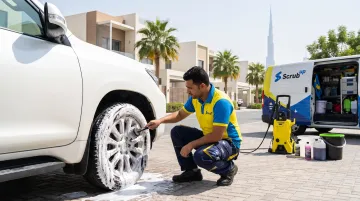
For heavier brake-dust buildup, Pressure Wash (AED 75) pairs pH-balanced foam with wheel-safe rotary brushes and controlled pressure, not a raw jet straight onto the rim.
Conclusion
There's no single "best" wheel ceramic coating. The right pick depends on your climate exposure, driving habits, and how much finish detail (matte versus gloss) you care about protecting.
Gyeon and CarPro suit drivers prioritising documented heat resistance; Armour suits those who want formulation transparency.
Whichever you choose, budget for the wash routine that keeps it alive. A coating is only as good as the maintenance behind it, especially under Dubai sun.
If you're already running a coated set of wheels, book ScrubUp's mobile car wash for regular, coating-safe upkeep, delivered straight to your parking spot across Dubai.
Frequently Asked Questions
Is ceramic coating on wheels worth it?
Yes—especially in the UAE’s heat and dust. It reduces brake-dust adhesion, resists heat, and makes routine cleaning faster and easier.
What is the best ceramic coating for wheels?
There's no universal "best." Gtechniq C5 and CarPro DLUX offer the clearest heat and durability specs, while Gyeon Rim EVO claims the highest heat resistance.
How long does ceramic coating last on wheels?
Manufacturer-backed figures range from about 1 year to 2 years, depending on the product and how well you maintain it. Plan on annual inspection—these figures are ranges, not guarantees.
Can I apply wheel ceramic coating myself?
Most consumer kits are DIY-friendly with proper surface prep and decontamination beforehand. Professional application tends to last longer due to more thorough prep work.
Does ceramic coating protect against brake dust?
Yes. It creates a slick barrier that reduces how much dust bonds to the surface, making it easier to rinse off rather than scrub.
How should I wash ceramic-coated wheels to keep them protected?
Use pH-neutral shampoo, soft mitts or foam, and avoid aiming unrestricted high-pressure jets directly at the coated surface. Wash when the wheels are cool, ideally out of direct sun.