Many car owners face the same question: scrub it yourself or book a mobile detailer? Both have trade-offs. This guide breaks down the DIY method, what professional cleaning actually involves, and how to decide based on your seats, schedule, and budget.
Key Takeaways
- DIY seat cleaning costs less upfront but demands 1–2 hours or more and careful drying to avoid mould
- Professional mobile services use steam and pH-balanced products matched to seat material
- Leather and Alcantara need different handling than fabric; one method doesn’t fit all seats
- Your choice depends on time, stain severity, seat material, and how often you're willing to redo it
DIY Car Seat Washing: Step-by-Step Method
Before you touch a bottle of cleaner, gather the basics:
- Vacuum with a crevice tool and upholstery brush
- Soft-bristle brush for agitation
- Microfiber towels (several)
- Material-appropriate cleaner (fabric shampoo, leather cleaner, or a mild detergent solution)
The Process
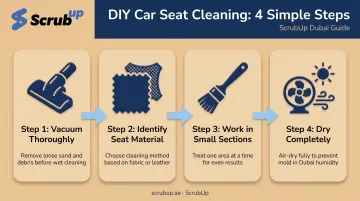
- Vacuum thoroughly first. Loose dirt and sand turn into mud the moment liquid touches it, so clear it out before anything else.
- Identify your seat material. Fabric, leather, vinyl, and Alcantara each need different treatment. Toyota's care guidance treats leather (cleaner, then conditioner) and fabric (shampoo, agitate, blot, dry) as separate processes.
- Work in small sections. Apply cleaner, agitate gently with the brush, then blot. Avoid rubbing in circles; technique varies by material and manufacturer.
- Dry completely. Open windows, use a fan, or run a wet/dry vacuum. Skipping this step is where most DIY jobs go wrong.
Common Mistakes
- Over-saturating fabric, which pushes moisture into the foam padding
- Using generic household chemicals on leather instead of a pH-appropriate cleaner
- Stopping after a couple of hours by an open window: 1–3 hours drying time needs strong airflow, which Dubai humidity often blocks
- Treating Alcantara like regular fabric: Alcantara's instructions warn against excess water and hard rubbing
Professional Car Seat Cleaning: What It Involves
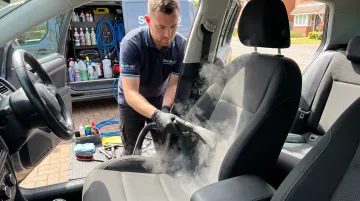
Professional cleaners rely on equipment most households don't own: extraction machines and controlled steam. Industrial steam units are built to run hot — commercial boiler specs range from 155°C to 185°C across professional-grade machines, though that's the equipment's internal temperature, not necessarily the seat-surface contact heat.
ScrubUp's mobile setup uses controlled vapour at 170°C for interior sanitisation, which is applied to seams, trims, and fabric to loosen grime and address odours without soaking the seat in liquid.
Why the On-Site Model Matters
- No drive time. Technicians come to your parking spot, whether that's a villa driveway or a basement in Discovery Gardens
- Trained material assessment. Technicians check whether a seat is fabric, leather, or vinyl before picking a product
- Eco-conscious approach. ScrubUp's Steam Wash relies on heat more than heavy detergents, with biodegradable, pH-neutral products added only when deeper stains need them
For interiors with kids, pets, or regular food and drink spills, that gap shows up fast. Odour and bacteria removal is one of the harder results to get consistently with a spray bottle and a brush at home.
DIY vs Professional: Key Differences
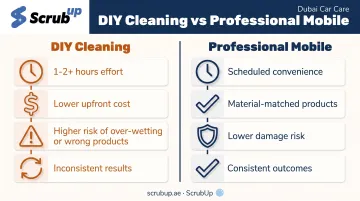
Time, tools, risk, and consistency separate a DIY seat clean from a professional mobile job:
| Factor | DIY | Professional Mobile |
|---|---|---|
| Time | 1-2+ hours active work | Scheduled appointment, technician does the work |
| Tools | Vacuum, brush, towels, shampoo | Steam machines, extraction equipment, pH-matched products |
| Risk | Over-wetting, wrong product on leather, mould | Lower, but depends on technician training |
| Consistency | Varies by effort and skill | More uniform across seat types |
A note on outcomes: There's no verified Dubai-specific study proving steam extraction removes more embedded dirt than manual scrubbing. The closest available research, a carpet allergen study, found steam added no statistically significant benefit over HEPA vacuuming alone on carpets — not seats.
What professional cleaning reliably offers is convenience and material-specific handling, not a guaranteed deeper clean.
Where professional service clearly wins is risk management. DIY carries a real chance of over-wetting foam padding or using the wrong cleaner on leather or Alcantara, both of which can mean costly repairs later.
Cost Considerations in the UAE
Dubai mobile providers price interior cleaning very differently depending on scope:
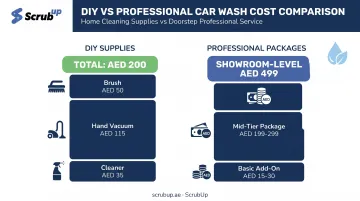
- Basic mobile interior add-ons start around AED 15-30
- Mid-tier deep interior packages with steam and shampoo extraction run AED 199-299
- Showroom-level interior detailing can reach AED 499
For a middle option, ScrubUp's Steam Wash covers seat sanitisation alongside exterior cleaning at AED 105 for 60-80 minutes.
DIY supplies look cheaper on paper:
- Upholstery cleaner: roughly AED 35
- A basic wet/dry hand vacuum: around AED 115
- Cleaning brush: about AED 50
That's a one-time outlay near AED 200. Redo the job every few weeks, replace bottles, or use the wrong product on upholstery, and the gap closes quickly.
A cracked leather seat from an unsuitable cleaner costs far more to repair than a few professional bookings.
How to Decide Which Option Is Right for You
Match the method to your seat material, stain severity, and how much time you can spare.
Choose DIY if:
- You have fabric or vinyl seats with light, fresh stains
- You have time on a weekend and don't mind the drying wait
- You're comfortable following material-specific instructions closely
Choose professional service if:
- You have leather or Alcantara seats that need careful handling
- You have set-in stains or odours, not fresh ones
- You're short on time or want doorstep convenience
If the professional route fits, ScrubUp's Steam Wash is bookable via app, website, or WhatsApp. It suits Dubai residents who want consistent interior results without blocking out an afternoon.
Frequently Asked Questions
How much does it cost to get your car seats cleaned?
Costs vary by seat material, vehicle size, and service depth. Dubai mobile packages range from roughly AED 15 for basic add-ons to AED 499 for full interior detailing. Check current provider rates for an accurate quote.
What do professional car detailers use to clean seats?
Typically pH-balanced shampoos, steam machines, extraction tools, and brushes suited to the seat material. Equipment varies by provider, but the goal is matching the product to fabric, leather, or vinyl.
Is it worth shampooing car seats?
Yes. Shampooing lifts embedded dirt, allergens, and odours that vacuuming alone misses. That improves hygiene and helps protect resale value.
How often should car seats be professionally cleaned?
Most providers recommend every 4-8 weeks for regular use, or sooner after a major spill. Frequency depends on how often you drive and where you park.
Can I clean leather car seats the same way as fabric seats?
No. Leather needs pH-neutral cleaners and conditioning to prevent cracking, while fabric shampoo methods rely on agitation and blotting. Using the wrong approach can damage either surface.