So what actually works? Baking soda and a good vacuum session handle some smells. Others need steam, extraction, and a technician who knows where to look. The right fix depends entirely on what's causing the smell and how deep it's gone.
This guide breaks down both routes, DIY techniques versus professional mobile detailing, so you can pick the one that actually solves your problem instead of masking it for a day.
Key Takeaways
- Mild, fresh odours (a recent spill or light food smell) often clear with baking soda and a thorough vacuum
- Musty, smoky, or mould-related smells sit deeper and need professional-grade steam and extraction
- Dubai heat and humidity speed bacterial growth and VOC release, so cabin odours worsen fast in parked cars
- Mobile services like ScrubUp bring steam sanitisation to your parking spot—no drive, no queue
Why Does My Car Smell Bad? Understanding the Root Causes
Most car odours trace back to a handful of culprits: trapped moisture, food residue, sweat-soaked upholstery, or condensation sitting inside the AC system. They're everyday problems, and Dubai's heat and humidity make them worse.
Here's the mechanism. A 2024 stationary-vehicle study found cabin material surfaces reaching 64.2°C, with surface temperature identified as the strongest driver of VOC emissions — stronger even than cabin air temperature. That heat doesn't just bake in smells. It actively pushes more volatile compounds out of plastics, foams, and fabrics.
Then there's the AC. When the evaporator drain gets blocked, condensate sits in a damp housing, and that dampness becomes a breeding ground. Automotive technical guidance links this pattern of heat, humidity, and a blocked drain to the musty smell that hits hardest right when you start the engine.
A 2022 Dammam study of vehicle AC systems found bacterial growth in 32.4% of cars and fungal growth in 13.5%, with old cabin filters strongly linked to both. It's a Saudi sample, not Dubai-specific, but the climate overlap makes the findings relevant here.
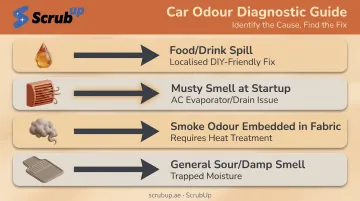
Identifying the actual source matters more than reaching for a spray:
- Food or drink spill → localised, usually DIY-friendly
- Musty smell strongest at startup → likely AC evaporator or drain issue
- Smoke odour → embedded in fabric and headliner, hard to fully remove without heat
- General sour or damp smell → often moisture trapped in mats or seat foam
DIY Odour Removal Methods: What You Can Do at Home
Vacuuming and Deep Cleaning
Start here, always. Seat creases, floor mat undersides, and the gaps between seats and console trap crumbs, dust, and sweat residue that feed odour-causing bacteria. A thorough vacuum session, including under the seats, removes a surprising amount of the source material before you even reach for a deodoriser.
Baking Soda and Activated Charcoal
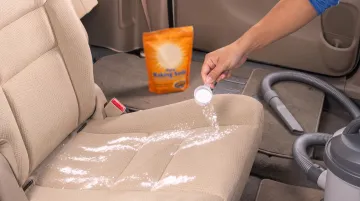
Baking soda absorbs odours from fabric surfaces reasonably well. A controlled experiment on organic waste bins found roughly 70% odour reduction over seven days using this method. That was a bin, not a car cabin, so treat it as a rough directional guide rather than a guarantee.
Activated charcoal works differently: it traps gaseous, airborne odour molecules rather than fabric-embedded ones. Performance depends on how much charcoal you're using and how saturated it gets. There's no verified "24-hour fix" timeline here, despite what some product packaging implies.
Vinegar and Natural Solutions
Diluted vinegar is a popular chemical-free option for musty upholstery smells. There's limited independent evidence validating vinegar specifically for automotive fabrics, dyes, or leather. Test a small hidden patch first.
Limitations of DIY
DIY methods share one blind spot: they treat what's on the surface, not what's embedded. Common gaps include:
- Bacteria living inside seat foam
- Blocked AC drains that keep recirculating the smell
- Results that swing with product quality and effort
If the smell returns after a few days, you're usually masking it, not solving it.
Professional Odour Removal: What Sets It Apart
Professional odour removal works on a different level, mostly because of heat and extraction.
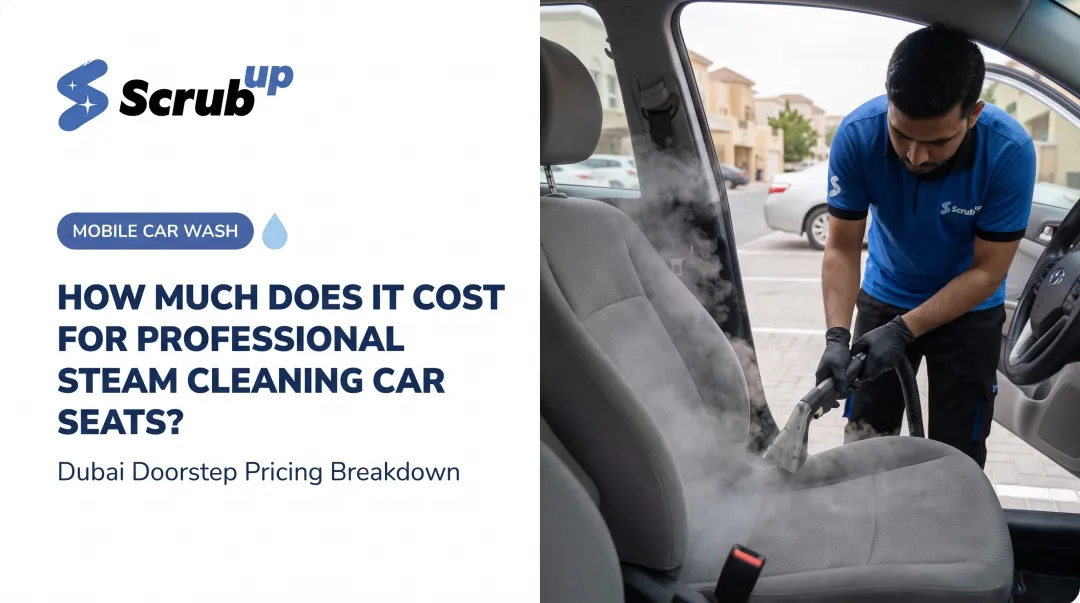
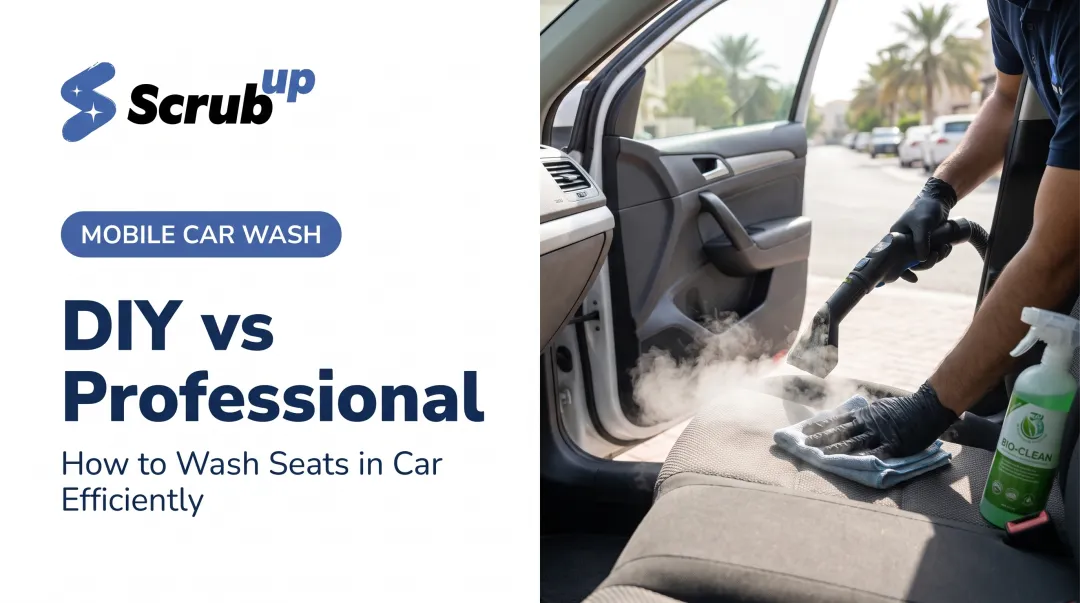
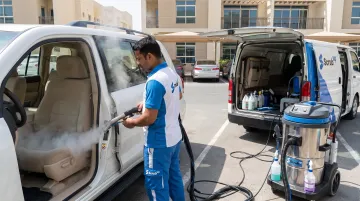
Steam sanitisation uses controlled high-temperature vapour to penetrate fabric seams and trim, not just sit on top of them. ScrubUp's Steam Wash tier, for example, uses vapour at 170°C to dissolve grime and target bacteria embedded deep in upholstery, without relying on harsh chemicals.
Steam alone isn't the whole story, though. Extraction equipment matters just as much:
- Pre-treats carpets and seats with a cleaning solution
- Pulls trapped dirt, moisture, and allergens out of foam and fibres with a professional extractor
- Leaves the interior far drier than a surface-level home clean
This is the step DIY genuinely can't replicate at home without specialised equipment.
Trained technicians also catch things you'd miss. Hidden mould along carpet edges, damp patches under mats, and residue around vents aren't obvious during a quick vacuum, but they're often the real source of a recurring smell.
Products matter too. ScrubUp uses biodegradable, pH-balanced cleaning solutions that sanitise without leaving chemical residue or damaging leather and trim—especially in Dubai's heat, where leftover residue and moisture feed odours fast.
ScrubUp brings the full setup—steam machine, extractor, and trained technician—directly to your parking spot. No driving to a car wash, no waiting in a queue, no repeat DIY attempts. You book through the app, website, or WhatsApp, and the team handles the rest while you get on with your day.
DIY vs. Professional: Which Should You Choose?
| Factor | DIY | Professional (ScrubUp) |
|---|---|---|
| Cost | Low, a few dirhams for baking soda/vinegar | AED 105 for Steam Wash (60-80 mins) |
| Time investment | Ongoing, may need repeat attempts | Single booked session, no travel |
| Depth of treatment | Surface-level, masks embedded odours | Deep extraction, steam penetration |
| Best for | Fresh spills, light food smell | Persistent musty, smoke, or mould smells |
Match the method to the odour's age and depth. A spill from this morning? Grab the baking soda. A musty smell that's been there for three weeks and keeps returning after you clean it? That's embedded, and it needs steam and extraction to actually shift.
For busy professionals across Dubai, time often matters as much as the smell itself. Driving to a car wash, waiting, then repeating a DIY process that didn't fully work costs more hours than booking a mobile Steam Wash that comes to your building's parking spot while you're at work.
Preventing Car Odours From Returning
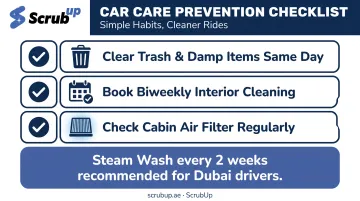
Stopping odours at the source costs less time and money than removing them later. Build these habits into your routine:
- Clear trash and damp items the same day — food wrappers, wet mats, and spilled drinks left overnight in Dubai heat speed up bacterial growth
- Book routine interior cleaning — a biweekly wash keeps dust, dirt, and moisture from building to smell-causing levels
- Check the cabin air filter regularly — old, dusty filters often cause musty AC smells; inspect sooner after dusty roads or if airflow feels weaker
For most Dubai drivers, a Steam Wash every couple of weeks (more often with heavy daily use or after dusty conditions) stops odours before they settle into fabrics and vents.
Frequently Asked Questions
Why does my car smell horrible inside?
Common causes include trapped moisture, food residue, mould near AC vents, or bacteria buildup in upholstery. Dubai's heat accelerates all of these, making smells stronger and faster to develop than in cooler climates.
What is the fastest way to remove a bad smell from my car?
Remove the actual source first, then vacuum thoroughly and apply baking soda to affected fabric. This works well for mild, recent odours but won't fix deep-seated bacterial or mould smells.
Can I remove musty AC smell myself?
DIY AC disinfectant sprays can help temporarily, but persistent musty smells often point to a blocked drain or damp evaporator housing. That usually needs professional inspection rather than another spray.
How often should I get my car interior professionally cleaned to prevent odours?
A clean every two weeks works well for most Dubai drivers. Heavy daily use, pets, or frequent food in the car warrant more frequent professional cleaning.
Is steam cleaning safe for all car interiors?
Professional steam cleaning at controlled temperatures is safe for fabric and leather when handled by trained technicians who use low-moisture settings. Testing a small patch first is standard practice for sensitive trims.
Does baking soda really work for car odours?
It works on mild, surface-level odours in fabric. It's far less effective against deep-seated bacterial growth or mould hiding in foam or AC components, where professional extraction is more reliable.