Yet most people don't get great results. They skip prep, grab the wrong attachment, or rush through the cabin in two minutes flat. In Dubai, that shortcut shows fast: fine sand, heat, and dust mean interiors get dirty quicker and need more frequent, more deliberate attention than in most other climates.
This guide walks through exactly how to vacuum a car interior correctly, built for real UAE conditions, not generic advice written for a cooler, drier city.
TL;DR
- Match the attachment to the surface: crevice tool, upholstery brush, or wide nozzle
- Dry-vacuum first, always, before any liquid or steam product touches the cabin
- Work boot to front, top to bottom, hard surfaces before fabric
- Vacuum every 2-4 weeks if you're parked outdoors in Dubai's dust
- Bacteria, odors, and deep stains need ScrubUp's mobile steam—beyond what a vacuum can do
When Should You Use Your Interior Car Vacuum?
A vacuum is built for loose, surface-level debris: dust, sand, crumbs, pet hair. It's not designed to lift grease stains, kill embedded odors, or handle bacteria build-up in seat foam.
Kärcher's own guidance confirms this distinction: vacuums remove coarse dirt, while grease, dried-in grime, and lingering smells need spray extraction to dissolve and pull that residue out.
Vacuuming alone is enough for:
- Routine dust and fine sand tracked in from outdoor parking
- Light debris like crumbs, wrappers, or loose hair
- Quick refreshes between passenger trips
Don't treat it as a substitute for a real deep clean. Running a vacuum over a coffee stain or a lingering smell will not make the problem disappear.
Outdoor parking in Dubai loads dust faster than covered or gated parking, so vacuum more often if the car sits outside overnight.
What You Need Before Using Your Vacuum
A few basics separate a thorough clean from a rushed one:
- Enough suction and runtime to finish a full interior pass without the battery dying mid-job
- Crevice nozzle for gaps, upholstery brush for fabric, and a wide nozzle for carpets and boot space
- A shaded, ventilated spot — Dubai heat stresses cordless batteries; Dyson recommends keeping units within 18–28°C and out of direct sun
- Mats and loose items out first so sand lifts free instead of packing deeper into fibres
How to Use Your Interior Car Vacuum (Step-by-Step)
A defined sequence stops you from redistributing dirt onto areas you've already cleaned, and it keeps you from missing high-traffic zones like seat seams and footwells.
Setup and Preparation
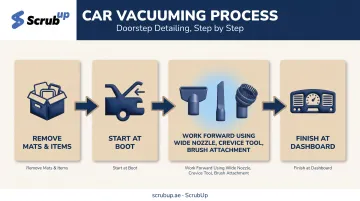
Remove floor mats, personal items, and any loose rubbish before you switch the vacuum on. Shake mats out outside the cabin.
The most common setup mistake? Vacuuming with mats still in the car. This just pushes sand further into the fibres instead of lifting it out — you end up doing the job twice.
Work From the Boot Forward
Start at the boot and work forward. Dirt shaken loose while cleaning the back would otherwise fall onto sections you've already finished.
- Wide nozzle — carpets and boot floor
- Crevice tool — seat gaps, console edges, door pockets
- Brush attachment — dashboards and vents
Technique for Fabric, Carpet, and Leather
Use steady, overlapping strokes on fabric and carpet. Fast swipes cut the time suction stays on the surface, so less debris lifts.
Methodical, repeated passes pull embedded sand out of the weave. A quick once-over only ever gets surface dust.
Go easy on leather and perforated seats. Full power pressed straight against these surfaces risks wear over time. No manufacturer gives an exact suction setting for perforated leather, so check your vacuum and vehicle manuals rather than guessing.
Monitoring During Use
Two things to watch for:
- Canister fullness — suction drops sharply once it's near capacity, so check regularly rather than waiting until it stops working
- Battery indicator or motor sound changes — a dip in tone often signals declining performance before the display does
After You Finish
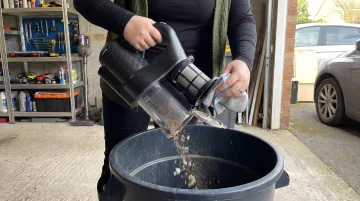
Empty the canister and wipe the filter immediately after each session. A full canister or a damp filter left overnight, especially after wet-vac use, causes odour buildup and weaker suction next time you turn it on.
Where a Vacuum Falls Short — And When to Call in Professionals
Vacuuming removes loose debris. It cannot touch bacteria, embedded stains, or heat-baked odours that build up in Dubai's climate. These problems live inside the fibres, not on the surface, and no amount of suction pulls them out.
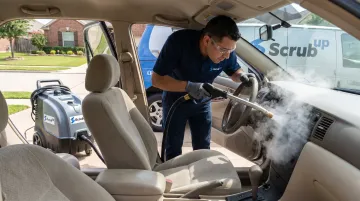
This is where professional steam and extraction equipment earns its place. ScrubUp's Steam Wash, for example, uses high-temperature steam to reach deep into vents, crevices, seats, and door panels, loosening grime, neutralising odours, and sanitising surfaces in a way dry vacuuming was never designed to do. It's chemical-free and uses minimal water, so the cabin gets refreshed without soaking anything.
For tougher cases:
- Embedded stains and allergens — the Interior Deepclean uses premium pre-treatment plus a professional extractor and wet-vacuuming system to physically pull trapped dirt out of seat foam and carpet fibres
- Persistent odours — Ozone (O3) Air Purification is used specifically to neutralise stubborn smells like smoke, pets, or food at a molecular level
Many busy professionals and warehouse managers land on the same routine: vacuum at home for upkeep, then book a periodic doorstep deep clean for the parts a household vacuum simply can't reach.
Booking takes under a minute through the ScrubUp app, website, or WhatsApp. The technician comes to your parking spot, home, or office, so your schedule stays intact.
Best Practices for Using Your Vacuum Effectively in the UAE
These habits protect your interior and your vacuum in UAE heat and dust:
- Vacuum every 2-4 weeks if parked outdoors in dusty or industrial areas; stretch to every 4-6 weeks for covered or gated parking
- Never vacuum straight after a liquid spill. Blot first, let it dry, then vacuum so residue is not pushed deeper into fabric
- Store the vacuum indoors, out of direct sun. UAE summer heat accelerates battery degradation beyond most manufacturers' storage limits
- Don't rely on suction specs alone. Modest power with sound technique and steady frequency beats a stronger unit used carelessly
Conclusion
Getting real results from your interior vacuum comes down to sequence, attachment choice, and consistency, not the number on the spec sheet. Treat regular vacuuming as routine protection for your cabin's hygiene and your car's resale value.
When embedded dirt, bacteria, or stubborn odors show up, it's time for a proper deep clean. Pairing your own vacuuming routine with a periodic ScrubUp doorstep service covers both: the daily upkeep and the deeper reset your vacuum was never built to handle.
Frequently Asked Questions
What type of vacuum is best for cleaning a car?
A cordless stick vacuum with strong suction and interchangeable attachments handles a full interior clean well. For quick spot cleaning between sessions, a compact handheld unit is easier to manoeuvre.
Are car vacuums better than using a normal household vacuum?
Not necessarily. Most vacuums are dual-purpose, and adding car-specific attachments like a crevice tool makes a household vacuum just as effective for interiors.
How long should a cordless car vacuum battery last?
A full interior clean typically takes 15-20 minutes, so look for a battery offering at least 20-30 minutes of runtime to avoid running out mid-clean.
Can I use a wet and dry vacuum inside my car?
Yes, and they're useful for spills. Just check the cable length reaches comfortably around the cabin, and let surfaces dry fully before closing the car up.
How often should I vacuum the inside of my car in Dubai?
Every 2-4 weeks for outdoor parking due to sand infiltration, and every 4-6 weeks for covered parking. Adjust sooner if you've had spills or travel with pets.
Can vacuuming remove bad odours from my car?
Vacuuming clears surface debris, but it doesn't touch the bacteria causing persistent smells. Lingering odours typically need steam or ozone treatment from a professional service to resolve.