Many car owners have heard the term "graphene coating" thrown around at detailing shops but aren't quite sure what makes the 12H variant different from standard ceramic options. Is it just marketing, or does it actually perform better?
This article breaks down five practical reasons why Graphene Ceramic Coating 12H has become a popular paint protection choice for vehicles driven and parked across the UAE.
TL;DR
- Graphene ceramic coating 12H beats standard ceramics on hardness, gloss, and hydrophobic performance
- Built for UAE UV, heat, and sand abrasion that wear down ordinary paint protection
- Gentle, regular maintenance keeps the coating performing and protects your investment
- Stronger protection cuts long-term detailing costs and keeps paint looking newer
What Is Graphene Ceramic Coating 12H?
Graphene ceramic coating 12H is a ceramic coating enhanced with graphene oxide molecules. Applied as a liquid polymer, it chemically bonds to your car's clear coat. Once cured, it forms a semi-permanent protective layer on top of the factory paint.
The "12H" refers to a pencil hardness rating detailers use to describe scratch resistance. Standard pencil hardness testing tops out at 9H under ASTM D3363 guidelines, so labels like 10H or 12H are typically brand-specific marketing terms rather than results from a universally recognised test (Ceramic Pro explains this scale confusion in detail).
That does not mean the coating is no harder than bare paint. It means the number itself is not a lab-certified guarantee.
In practice, it is less a cosmetic upgrade and more a long-term protective layer for your paint.
Top 5 Reasons to Choose Graphene Ceramic Coating 12H
These reasons focus on how the coating performs in real UAE driving and parking conditions, not just what's printed on the packaging.
Reason 1: Superior Hardness and Scratch Resistance
Graphene ceramic coatings create a harder surface layer than paint alone, which helps resist the fine scratches and swirl marks that build up from everyday contact.
Why this matters in the UAE:
- Sand particles carried by wind can scuff unprotected paint during normal driving
- Dust storms leave abrasive grit sitting on the surface
- Frequent contact washing at traditional car washes introduces micro-scratches over time
A harder coating gives your clear coat a buffer against these small, cumulative impacts. That said, no ceramic coating, regardless of its hardness label, prevents rock chips or deep scratches from physical impact. For that level of protection, you'd need paint protection film (PPF) layered underneath.
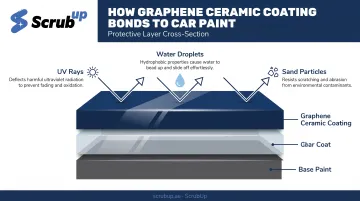
This benefit matters most if you drive daily or park outdoors in dusty residential communities rather than in covered or basement parking.
Reason 2: Exceptional Heat Resistance and Reduced Water Spotting
Graphene has naturally high thermal conductivity at the material level. In a cured automotive coating, this property is generally understood to help the surface release heat more evenly rather than trapping it in hot spots.
Here's why that matters for water spots specifically:
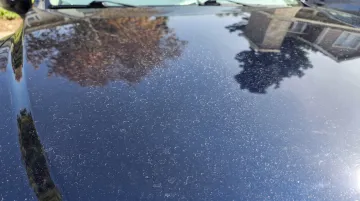
- Water left on a hot surface evaporates unevenly
- Minerals in the leftover water can etch into the clear coat as they dry
- This etching is a common complaint for vehicles parked outdoors in direct sun
Dubai's summer heat makes parked cars significantly hotter than the surrounding air, creating ideal conditions for this kind of spotting. A coating that resists this etching helps preserve your paint's clarity, especially if your car doesn't have access to covered parking during peak summer months.
Reason 3: Long-Lasting, High-Gloss Finish
Graphene-enhanced coatings tend to create a denser, smoother surface layer than ceramic alone. In practice, this translates to noticeably deeper gloss and richer colour vibrancy, particularly on dark paint.
Where this shows up most:
- Luxury vehicles where finish quality is part of the appeal
- Dark-coloured cars, where swirl marks and dullness are far more visible than on lighter shades
- Vehicles that spend years, not months, exposed to UAE sun
Compared to wax or basic sealants that need redoing every few weeks, a properly maintained graphene coating holds its shine far longer.
Reason 4: Anti-Static, Dust-Repelling Surface
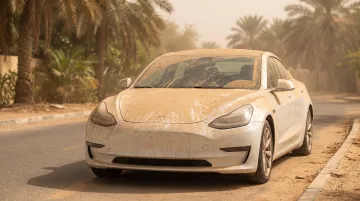
Graphene oxide has anti-static properties, meaning a coated surface is less likely to attract and hold onto airborne dust particles through static charge.
Practically, this means:
- Your car stays visibly cleaner for longer between washes
- Dust that does settle tends to sit more loosely on the surface, making it easier to rinse off
- You may need to wash less frequently overall
In a sandy, dusty environment like Dubai, this is a genuinely useful advantage. It's also a small but meaningful nod to water conservation, since fewer washes mean less water use over time.
Reason 5: Easier Maintenance and Long-Term Cost Value
The hydrophobic, slick surface created by a graphene coating makes everyday grime, dirt, and bird droppings far easier to rinse away without heavy scrubbing.
This matters for your wallet too:
- Less need for polishing or waxing
- Reduced reliance on aggressive scrubbing that can wear down the coating over time
- Fewer trips to a detailing shop for correction work
That said, the coating only lasts as long as you treat it well. Use a gentle, coating-safe wash routine instead of automatic brush washes that risk swirl marks.
ScrubUp's doorstep Eco Wash (AED 49, 35–45 minutes) uses biodegradable, pH-neutral cleaners that are safe for ceramic coatings and paint sealants, so you keep the protection intact without harsh scrubbing.
Why This Matters More in the UAE Climate
Extreme summer heat, an intense UV index, and fine desert sand combine to degrade paint faster here than in temperate climates. A car that might go five years without major paint issues in a milder climate can show noticeable wear in half that time under UAE conditions.
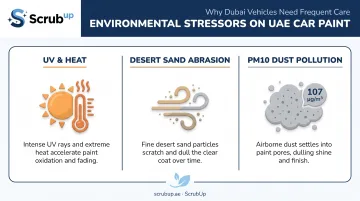
Unprotected paint takes the hit from three stressors at once:
- Intense UV and heat that break down clear coat faster than in cooler regions
- Fine desert sand that abrades surfaces in daily driving and shamal winds
- Elevated PM10 dust that cakes on cars left outdoors
Dubai's PM10 levels have been climbing in recent years, with residential areas recording monthly averages as high as 107 micrograms per cubic metre, according to a peer-reviewed analysis of UAE air quality data. Cars parked in residential communities or industrial zones pick up that dust load day after day on top of heat and sun.
Many Dubai owners now treat graphene coating as practical protection for a major investment.
Maintaining Your Graphene Ceramic Coating 12H
A coating is only as good as the care it receives afterward. Skip the wrong wash method, and you can undo years of protection.
Best practices for coated vehicles:
- Avoid automatic brush car washes. Rotating brushes at most drive-through washes can leave swirl marks, even on a hardened coating.
- Hand wash or use touchless mobile washing. These methods clean well without dragging grit across the surface.
- Use pH-neutral shampoos. Harsh detergents can strip hydrophobic properties over time.
- Dry with microfiber towels only. Rough cloths or paper towels can leave fine scratches that dull the finish.
ScrubUp's mobile service brings this approach to your doorstep across Dubai. Technicians use biodegradable, pH-balanced foam and premium microfiber cloths so coated paint is cleaned without the abrasion risk of traditional car washes.
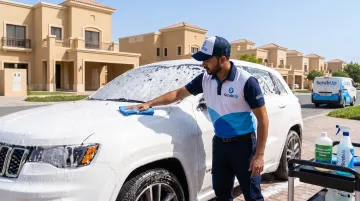
You protect the coating's lifespan without leaving your parking spot.
Frequently Asked Questions
What is 12H graphene ceramic coating?
It's a graphene-infused ceramic coating marketed with a 12H hardness label, offering enhanced scratch resistance, gloss, and durability compared to standard ceramic coatings. The "12H" figure is a brand-specific claim rather than a universally standardised test result.
Is 12H graphene ceramic coating worth it?
For vehicles exposed to harsh climates like the UAE's, the added protection against sand, heat, and UV generally justifies the higher upfront cost. Reduced long-term detailing needs also help offset the initial investment.
How long does 12H graphene ceramic coating typically last?
Manufacturer claims range from 3 to 9+ years, depending on the product and how well it's maintained. Climate exposure and washing habits play a major role in actual longevity.
Can I use an automatic car wash after applying graphene ceramic coating?
It's best to avoid brush-based automatic washes, since the brushes can introduce swirl marks even on a hardened coating. Hand washing or touchless mobile washing is the safer choice.
Does graphene ceramic coating protect against stone chips or scratches from impact?
No. Coatings protect against chemical and environmental damage, like UV, minor marring, and water etching, but not physical impact. For chip and impact protection, you'd need paint protection film (PPF).
How is graphene ceramic coating different from regular ceramic coating?
Graphene particles are added to enhance hardness, flexibility, heat dissipation, and anti-static dust repellency beyond what standard silica-based ceramic coatings typically offer.