Get it wrong, and you can strip wax, streak paint, or even damage seals and trim. Many drivers use pressures that are too high or hold the nozzle too close, not realizing the risk until the paint shows swirl marks.
This guide covers when DIY makes sense, exactly what you need, the step-by-step process, key parameters to watch, common mistakes, and a professional alternative for anyone who'd rather skip the hassle entirely.
TL;DR
- 1,200–1,900 psi with a 25–40° wide-fan nozzle; stay at least 30 cm from the paint
- Pre-rinse debris, apply pH-balanced detergent, agitate tough spots, then rinse fully
- Avoid narrow "pencil jet" nozzles and washing in direct midday sun
- Check your community's rules on water runoff before washing at home in the UAE
- Mobile services like ScrubUp use biodegradable, pH-neutral products and come to your parking spot
How to Pressure Wash a Car Like a Pro
Step 1: Pre-Rinse and Remove Loose Debris
Clear leaves, sand, and grit by hand or with a soft brush before you touch the pressure washer. Fine sand acts like sandpaper if it's dragged across paint during washing, so this step is especially important in Dubai, where fine sand and grit are constant.
Use a wide nozzle setting at low pressure to rinse off loose dirt, wheels, and wheel arches first.
Step 2: Apply Detergent
Pick a pH-balanced car shampoo or foam cleaner compatible with your washer's foam lance. Apply it, then let it dwell for a few minutes to loosen grime.
Avoid applying detergent in direct midday heat. Karcher specifically warns against washing in midday sun because heat makes cleaning solutions dry faster, leaving streaks before you've even started rinsing.
Step 3: Wash and Agitate Stubborn Areas
Use a soft wash mitt or brush attachment on bug residue, tar, or bird droppings. Wheels and wheel wells need separate attention with a dedicated wheel cleaner and brush, since brake dust is more abrasive than regular road dirt.
Keep your nozzle at a 25-40 degree spray pattern. Concentrated jets near emblems, trims, or sensors can force water into seals it was never meant to reach.
Step 4: Rinse and Dry
Rinse from top to bottom with a wide fan nozzle, keeping a safe distance from the bodywork. Manufacturer guidance from Karcher's car washing recommendations notes tyres specifically need 30cm clearance, even when the body panel distance is closer.
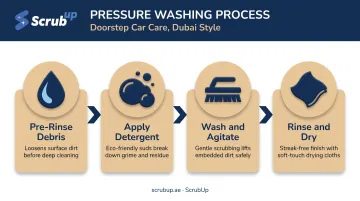
Get all soap off before it dries, then dry with a microfibre cloth or chamois. That last pass matters in the heat:
- Evaporating water leaves mineral deposits on paint
- Direct sun and high temperatures speed up spotting
- A quick manual dry after rinsing prevents most water marks
When Should You Pressure Wash Your Car Yourself?
DIY works well when you have your own equipment, a water source, and outdoor space to work in. It's fine for:
- Light-to-moderate dust buildup
- Seasonal deep cleans
- Situations where time isn't tight
It gets impractical fast in gated communities or basement parking with no water access, or when you're simply short on time.
ScrubUp already serves drivers in these setups—gated villas in areas like Al Warqa and MBR City, and tower parking in Downtown Dubai. If your spot has no water hookup or your building bans on-site washing, a mobile wash comes to you and removes the constraint entirely.
What You Need Before Pressure Washing Your Car
Get the right gear in place before you start—the setup decides how clean the finish looks and how safe the paint stays.
Equipment:
- Pressure washer rated 1,200–1,900 psi
- Adjustable nozzle
- Hose of at least 5 metres
Materials:
- pH-balanced car shampoo
- Microfibre wash mitt
- Wheel cleaner and brush
- Drying cloth or chamois
Water and Compliance Readiness: Confirm water access at your parking spot and check your community’s runoff rules before you rinse anything.
Dubai’s Local Order No. 11 of 2003 covers discharging vehicle-wash water outside designated areas, and many communities go further. Emaar Community Management’s guidelines, for example, typically require:
- A hose cut-off valve
- No excessive runoff into common areas
- No vehicle washing in common areas
If DIY washing is restricted where you park, a mobile service such as ScrubUp can clean the car at your spot without hose runoff into shared areas.
Key Parameters That Affect Your Results
Results depend on four variables working together—not on any single setting alone.
| Parameter | Why It Matters | Recommended Range |
|---|---|---|
| Pressure | Too high strips wax and risks chipping paint; too low won't cut grime | 1,200-1,900 psi |
| Nozzle angle | Too narrow can etch paint; too wide loses cleaning power | 25–40° fan pattern |
| Distance | Standing too close pushes water into seals and electrical components | 30cm+ from bodywork |
| Water temperature | Warm water loosens bird droppings and road film faster than cold | Cold for routine washes; warm for stubborn spots |
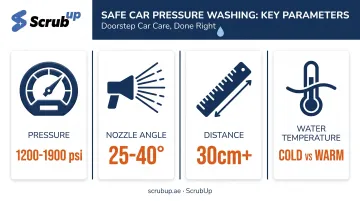
Car and Driver's testing benchmarks back up the pressure range, noting that machines pushing well beyond 1,800 psi raise the risk of surface damage on standard paintwork. Stay conservative rather than maxing out your machine's output.
Common Mistakes When Pressure Washing a Car
A few common missteps undo an otherwise careful wash and can mark paint, leave streaks, or create runoff issues at home. Steer clear of these:
- Using a narrow, high-intensity nozzle instead of a wide fan tip, which focuses force and can etch clear coat
- Washing in direct sunlight so detergent dries and streaks before you rinse
- Holding the wand too close, which can scar paint and push water past trim seals
- Ignoring community runoff rules in UAE residential areas that limit where wash water can go
- Reaching for dish soap or household cleaners that strip wax and dry out plastics
Alternatives to DIY Pressure Washing
Not everyone has the time, tools, or parking access for a proper DIY wash.
Traditional Car Wash Centres
Good if you need a quick wash and don't mind driving and waiting. The trade-off is queues, inconsistent quality between visits, and higher water use — drive-through washes average around 280 litres per vehicle, according to EPA WaterSense benchmarks.
Mobile Car Wash Services (such as ScrubUp)
Ideal for busy professionals, residential communities, and anyone who wants doorstep convenience without the travel or waiting. ScrubUp's tiers break down as:
| Tier | Price | Duration | Best For |
|---|---|---|---|
| Eco Wash | AED 49 | 35-45 mins | Light dust, regular upkeep |
| Pressure Wash | AED 75 | 60-80 mins | Sand, road grime, buildup |
| Steam Wash | AED 105 | 60-80 mins | Deep sanitization |
The Pressure Wash tier applies a high-density foam pre-wash before targeted high-pressure cleaning on wheel arches, bumpers, and lower panels. Prices are fixed upfront, with no added fees on the day. You can book through the ScrubUp app, at book.scrubup.ae, or via WhatsApp.
Waterless Cleaning
Best for light dust removal in water-restricted parking areas like basements. It's less effective on heavy grime or caked-on mud, where actual pressure and water are still the better tool.
Conclusion
Getting a pressure wash right comes down to controlling pressure, nozzle angle, and distance together—not any single setting. Most paint damage and streaking trace back to poor preparation, the wrong nozzle, or washing under direct heat.
If you'd rather skip the equipment and the guesswork, ScrubUp's mobile service uses biodegradable, pH-neutral products and comes directly to gated communities, basement parking, and offices across Dubai. No water access or driveway required.
Frequently Asked Questions
What PSI or bar is safe for pressure washing a car?
Manufacturer guidance points to 1,200–1,900 psi (about 80–130 bar) as a safe range for car paint. Exceeding that range raises the risk of surface damage.
Can a pressure washer damage car paint?
Yes, if you use a narrow nozzle, stand too close, or exceed the recommended pressure range. A 25–40 degree fan nozzle at 30 cm or more keeps paint safe.
What nozzle should I use to pressure wash my car?
A 25-40 degree wide fan nozzle is recommended over narrow "pencil jet" settings, which concentrate pressure into a small, damage-prone area.
Is it allowed to wash your car at home in Dubai?
Many residential communities restrict runoff from private washing into common areas, and some require hose cut-off valves. Check your specific community's rules, or opt for a mobile service instead.
How often should I pressure wash my car?
Dubai’s dust and sand mean most daily drivers benefit from a wash every week to two weeks.
Should I use hot or cold water in a pressure washer for my car?
Cold water is fine for standard washing and just as effective at removing dirt. Warm water is only really useful for softening fresh bird droppings or similar stuck-on contamination.