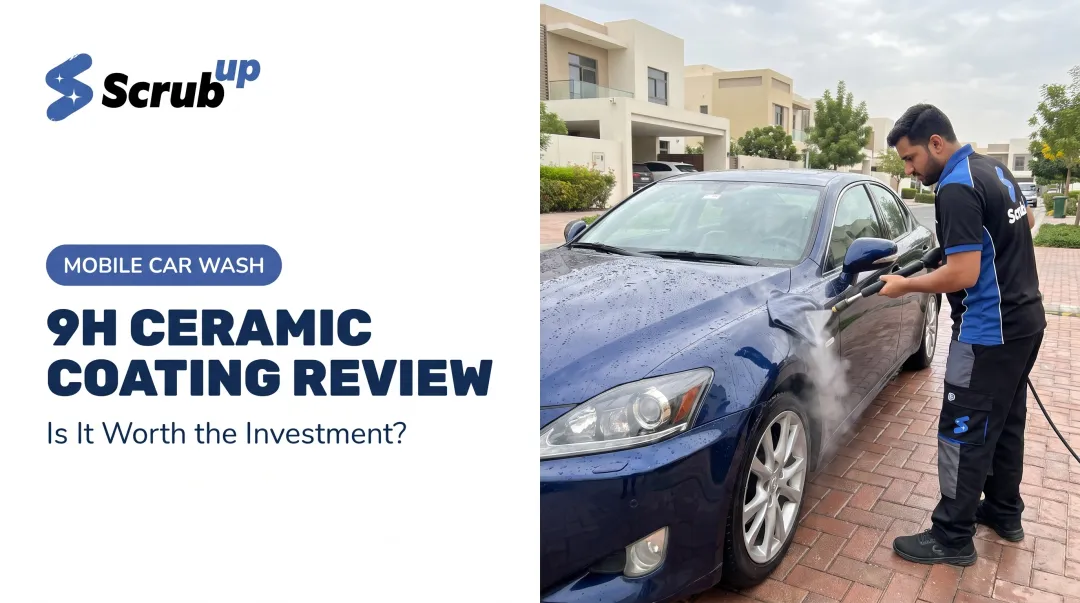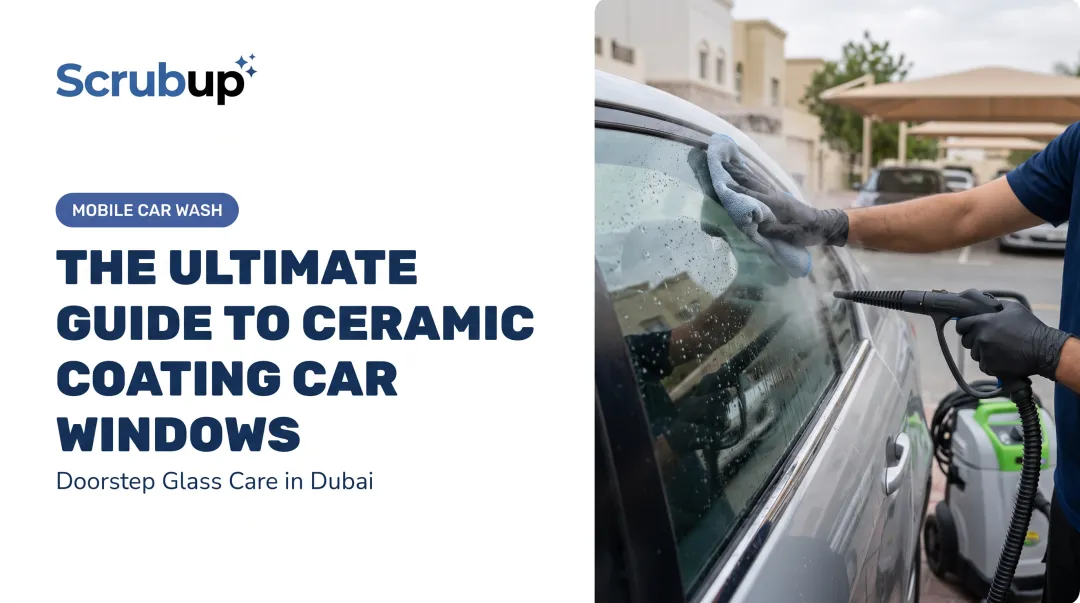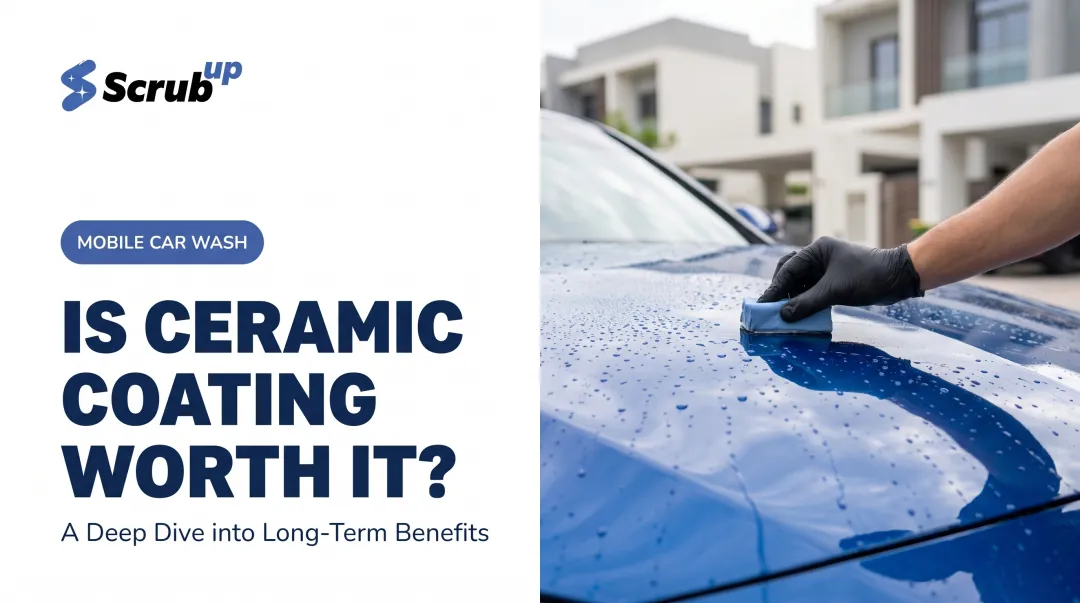
But ceramic coating gets marketed with big promises. Some of it holds up. Some of it doesn't. The real value shows up in everyday driving and how the car holds up to daily UAE conditions, not in glossy sales pitches.
This guide breaks down what ceramic coating actually delivers, where it falls short, and how proper maintenance determines whether you get years of protection or a coating that fades fast.
TL;DR
- Liquid polymer bonds to paint and forms a semi-permanent protective layer
- Blocks UV damage and oxidation while adding lasting gloss
- Hydrophobic surface sheds dirt and resists chemical stains for easier washes
- Does not stop rock chips, scratches, or water spots—washing is still required
- pH-neutral washes are required to reach the coating's full lifespan
What Is Ceramic Coating
Ceramic coating is a nanoceramic liquid polymer, typically silicon dioxide (SiO2) based, applied to your car's exterior paint. Unlike wax or sealant, it chemically bonds to the clear coat rather than sitting on top of it, which is why manufacturers like Gtechniq describe it as a semi-permanent layer rather than a removable product.
It's typically applied to painted body panels, and sometimes wheels or glass, after thorough paint correction and decontamination. Skipping that prep step is one of the most common reasons coatings underperform.
Ceramic coating protects paint and cuts down maintenance effort. It is not a magic scratch-proof or wash-free solution, no matter what the marketing says.
Key Advantages of Ceramic Coating
The advantages below show up in protection, appearance, and time saved—outcomes you can measure over months of ownership. Dubai's climate, with its intense sun, sand, and dust, makes several of these advantages especially relevant if you're parking outdoors daily.
UV and Oxidation Protection
Quality ceramic coatings contain UV inhibitors designed to shield painted surfaces and help preserve colour and clarity over time Gtechniq. That matters in Dubai, where UV exposure regularly hits "Very High" to "Extreme" levels on the standard index scale.
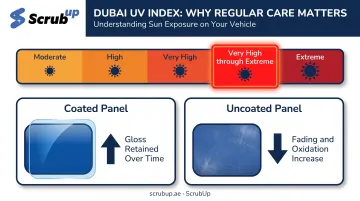
Why this matters:
- Reduced oxidation helps preserve your factory paint's colour and depth for years
- Less fading means fewer touch-ups and better resale value down the line
What you’ll notice: Better gloss retention, stronger resale value, and fewer repaints or touch-ups.
Most relevant for: Vehicles parked outdoors daily, dark-coloured cars (which show fading faster), and owners planning to keep their car long-term.
Hydrophobic Properties and Easier Cleaning
This is the benefit most owners actually feel week to week. Ceramic coating's hydrophobic surface causes water to bead and roll off, carrying dirt and grime along with it. Products like CQuartz Professional report contact angles of 110-115 degrees with a sliding angle around 15 degrees, meaning water genuinely doesn't want to sit on the surface CQuartz.
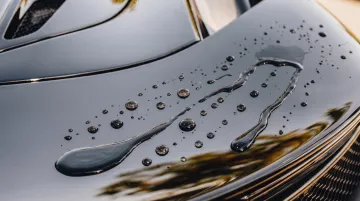
Day-to-day payoff:
- Dirt bonds less to the paint, so you scrub less and cut the risk of swirl marks
- Washes take less time—useful if you'd rather not spend Saturday morning with a hose
What you’ll notice: Lower wash frequency and duration, plus less paint risk from heavy scrubbing.
Most relevant for: Sandy, dusty areas like Dubai Industrial City or Al Qusais, where dust returns within days of a wash.
A coating-safe maintenance wash helps you keep that hydrophobic surface working. ScrubUp's Eco Wash (AED 49) uses lubricated, waterless cleaners that encapsulate dust for safer removal, with pH-balanced products and soft microfiber that preserve wax, sealants, and ceramic coatings instead of stripping them.
Protection Against Chemical Stains and Environmental Contaminants
Ceramic coating resists bonding from bird droppings, tree sap, road salts, and industrial fallout. It works as a sacrificial barrier, so contaminants sit on the surface rather than etching directly into your paint.
Manufacturer guidance is clear that this buys you response time rather than full immunity. Gtechniq notes that coated paint is protected from a bird dropping's acidity, but visible etching can still occur if it's left too long Gtechniq. Product-specific testing on CARPRO's CQUARTZ SiC shows resistance across a pH range of 3 to 12, which covers most everyday acidic and alkaline contaminants.
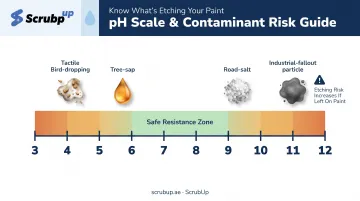
Why this helps:
- Lower risk of permanent etching from acidic contaminants common in urban and industrial UAE zones
- Lower lifetime spend on paint correction
What you’ll notice: Fewer etching incidents and less corrective work over the years.
Most relevant for: Cars parked near trees, in industrial areas, or under regular bird activity.
What Ceramic Coating Cannot Do
Ceramic coating gets oversold constantly. Here's what it genuinely does not fix:
- Scratches, swirl marks, or rock chips – the coating retains the paint's underlying physical properties, so it's not scratch-proof or impact-proof
- Water spots from hard water – mineral deposits from evaporating tap water can still leave marks, and UAE tap water is no exception
- The need for regular washing – dust and grime still accumulate; the coating just makes removal easier, not optional
Even Ceramic Pro's own guidance is clear: a 9H coating does not adequately protect against rock chips or fully prevent water spotting.
Getting the Most Value from Ceramic Coating
Coating performance is only half the equation. How you maintain it decides whether you get two years or five.
Start with proper prep. Ceramic coating performs best when applied after genuine paint correction and decontamination by a trained professional. Coating over existing swirls just locks them in.
Wash the right way, consistently. Harsh automatic brush washes, abrasive towels, and dry wiping are among the most common causes of coating degradation. A gentle, consistent wash routine matters more than the coating brand you chose.
That is why a controlled mobile wash helps protect the finish you paid for. ScrubUp's doorstep service uses:
- pH-balanced foam and controlled pressure (Pressure Wash, AED 75) to lift road grime and sand without stripping protection
- Steam at 170°C (Steam Wash, AED 105) to clean with less reliance on harsh chemicals
- Soft microfiber drying cloths to lower the risk of new swirl marks
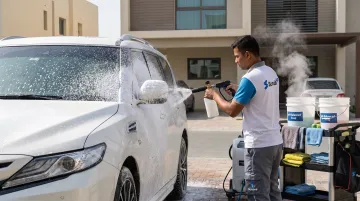
Always check your coating's technical spec sheet for product compatibility. As a default, skip contact washes and harsh chemicals in favour of a controlled doorstep process.
Conclusion
Ceramic coating delivers lasting value through UV protection, easier cleaning, and long-term paint preservation. Those benefits compound over years of ownership.
That compounding only happens with proper maintenance. Skip the gentle, regular washing, and you'll shorten the coating's life regardless of what you paid for the application.
Treat ceramic coating and consistent care as a package deal, not two separate decisions. One without the other wastes the investment you already made.
Frequently Asked Questions
What is the average cost to ceramic coat a car?
Most passenger cars in the UAE fall roughly between AED 1,000 and AED 3,500, depending on vehicle size, coating grade, and paint prep. Get quotes from a few certified installers before you commit.
How long does a ceramic coat last on a car?
Professional-grade coatings typically last 2 to 5 years, depending on the product and how well you maintain it. Proper washing habits can push a coating toward the higher end of that range.
Can I wax over ceramic coating?
No. Traditional wax is unnecessary and can dull the coating's hydrophobic performance. For extra gloss, ask for a coating-compatible SiO₂ topper instead.
Is it worth getting a ceramic coating on a car?
Yes, if you value long-term paint protection and easier upkeep, especially in a harsh climate like Dubai's. It's less worthwhile if you're not prepared to maintain it properly afterward.
What destroys ceramic coating?
Harsh chemical cleaners, automatic brush washes, and wiping with dirty or abrasive cloths are the most common causes of coating breakdown. Neglecting contaminants like bird droppings or sap also accelerates damage.
Is there anything better than ceramic coating for cars?
Paint protection film (PPF) gives stronger impact protection against rock chips, which ceramic coating can't match. Many owners use both: PPF for impact zones and ceramic coating for hydrophobic and chemical protection.